Close Menu
Menu
By Bret R. Shaw & Cheryl Shea (University of Wisconsin-Madison), Laura Witzling (Research Consultant) & Dar Wolnik (Farmers Market Coalition)
A recent article by Project for Public Spaces, “The Impacts of Market Cities: How Markets Promote Social Connection & Wellbeing,” told the story of three communities where farmers markets became more than a place to shop, they were hubs for connection. These stories demonstrate how farmers markets benefit our communities beyond connecting people to local farmers and nutritious food.
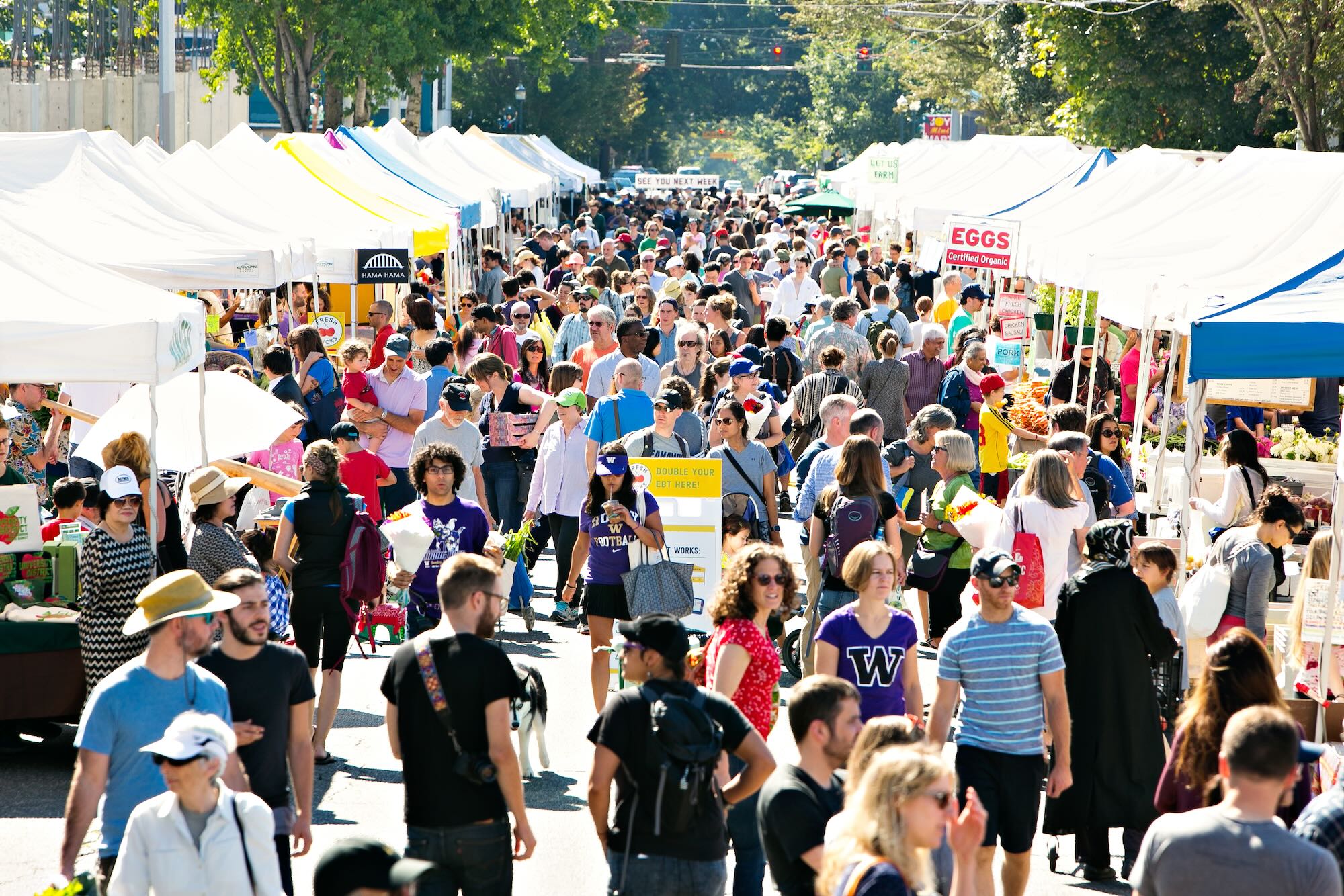
Recently, our team from the University of Wisconsin-Madison and the Farmers Market Coalition has been exploring similar themes through a national survey. The results show real data behind the community benefits of farmers markets that many of us personally witness or experience. Here’s what we found: the more often people go to farmers markets, the more connected they feel to their community. People who frequented farmers markets more observed higher levels of two civic engagement measures: community participation and a stronger sense of community, as described in our new study published in Information, Communication & Society. We hope readers can use these results to advocate for how public markets benefit our communities within your networks and spheres of influence.
As people who attend farmers markets know, they offer more to communities than food. Unlike shopping at the grocery store, farmers markets are recurring, locally based, and, importantly, they bring people together. It is the kind of place where you might regularly run into a neighbor who you don’t see often which strengthens familiarity, or you might have an unexpected conversation with someone new. At some markets, you may see tables staffed by professionals or volunteers from local organizations to engage with attendees, places to access resources, or a local musician that makes the market atmosphere more fun.
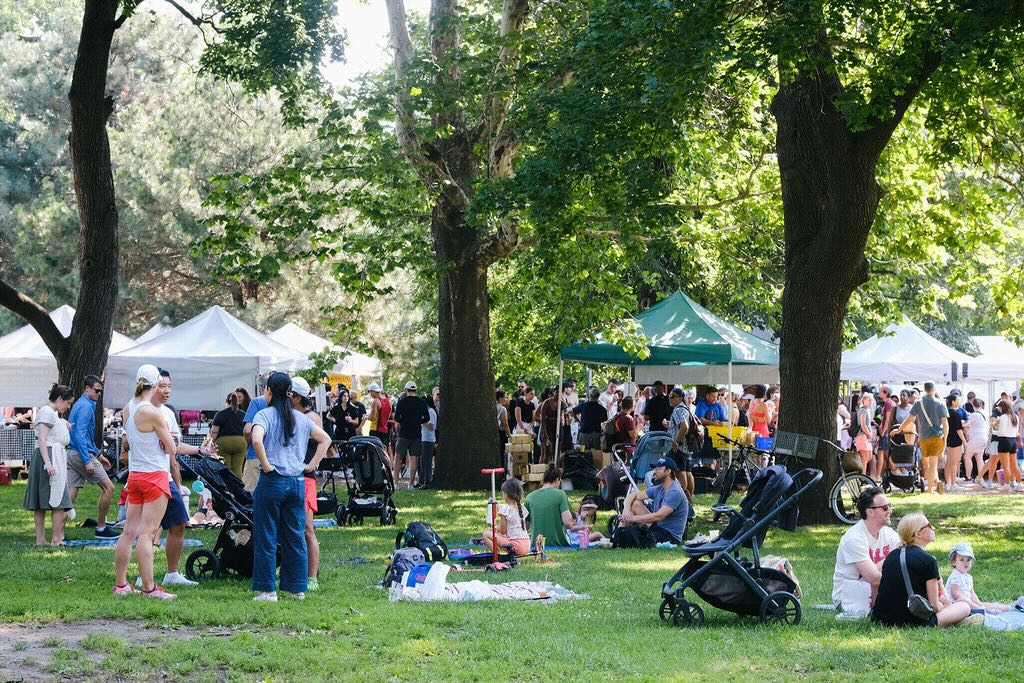
Having more opportunities for such social interactions is especially meaningful during a period where people have become increasingly disconnected from their neighbors. According to recent polls, Americans spend significantly less time joining community groups, participating in civic life, and connecting with faith-based communities than in the past.
With an estimated 8,600 farmers markets in regular operation across the country, they are well positioned to enhance social interactions within communities and increase information sharing through those interactions. In 2022, two of the authors wrote an article in the International Journal of Sociology that argued farmers markets can act as ‘communication infrastructure’ within communities, and by doing so, facilitate civic engagement. As individuals have opportunities to interact, they have more opportunities to share information that can help them civically engage. By surveying farmers market managers and residents of Wisconsin, results showed that farmers market managers frequently partner with local organizations to help them connect with market attendees. Moreover, farmers market attendees reported communicating more with others in their communities about local food. These preliminary results encouraged us to learn more about the community benefits of farmers markets and how they can contribute to civic life and community wellbeing.
To explore the farmers market community connection at a national level, we recently conducted a survey (N=5,141) to learn more about what people throughout the U.S. do at farmers markets, and how attendance can contribute to individual and societal community benefits. In our first article from the national survey published in the Journal of Agriculture, Food Systems, and Community Development, we found that, in addition to buying products, people do many other activities at the farmers market.

Here’s what we learned from the 81% of respondents in this national representative survey who said they have attended a farmers market before:
These findings underscore that farmers markets can be a shared community experience that goes significantly beyond consumption.
In our most recent article, we specifically examined how farmers markets might work together with different communication channels (e.g., news, community groups, social media) to influence people’s levels of community participation and sense of community. Our results provide more direct evidence that farmers markets are important third places that directly benefit our communities and work independently and jointly with other communication channels to amplify different measures of civic outcomes. In fact, one key finding was that people who attended farmers markets more frequently reported higher levels of the civic outcomes we measured.

The measures we looked at were community participation and sense of community. To measure community participation, we asked participants questions related to how often they attended public meetings (e.g., school board meetings or town halls), contacted public officials about local issues, did volunteer work, donated to local causes or charities, participated in clubs or community organizations, and helped people in their community. Sense of community was measured with survey questions related to how much people in their community solve problems together and help one another, as well as general questions about whether respondents felt they had good relationships in their community and felt connected with and supported by their community. Attending farmers markets more often was positively related to both community participation and sense of community.
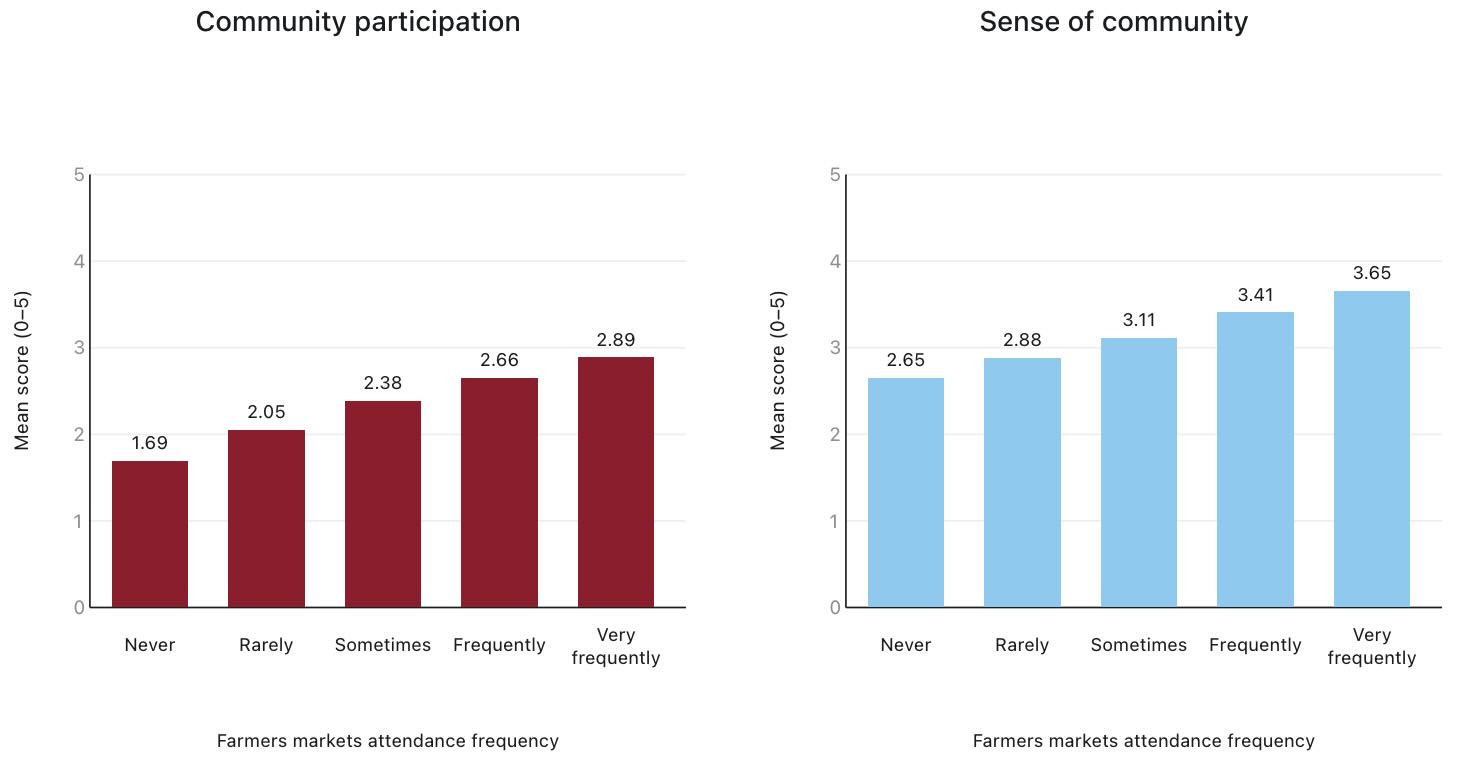
And community participation and sense of community can be influenced by a variety of information sources such as local and national news, social media and information from community organizations. Interestingly, in our results, farmers markets seem to play different roles depending on the communication channels people are already using. For people tuned into broader media like national news or TikTok, going to the market is linked to higher levels of community participation. For people paying more attention to information from community organizations, going to the market more often is linked to a stronger sense of belonging in their community. In both cases, the face-to-face element of farmers markets seems to matter.
Our research used a cross-sectional survey, and there are other plausible explanations for our results. Indeed, it is likely that people who are more engaged in their communities also attend farmers markets more frequently. Nonetheless, based on the collective evidence, frequent farmers market visits go hand in hand with a stronger sense of community and greater community involvement. We hope our work can inspire future research that explores the many ways public markets can enhance our communities beyond connecting consumers to local farmers and delicious, nutritious food.
The rich text element allows you to create and format headings, paragraphs, blockquotes, images, and video all in one place instead of having to add and format them individually. Just double-click and easily create content.
The rich text element allows you to create and format headings, paragraphs, blockquotes, images, and video all in one place instead of having to add and format them individually. Just double-click and easily create content.
Body Text Body Link
The rich text element allows you to create and format headings, paragraphs, blockquotes, images, and video all in one place instead of having to add and format them individually. Just double-click and easily create content.
Here is some highlighted text from the article.

Headings, paragraphs, blockquotes, figures, images, and figure captions can all be styled after a class is added to the rich text element using the "When inside of" nested selector system.
Headings, paragraphs, blockquotes, figures, images, and figure captions can all be styled after a class is added to the rich text element using the "When inside of" nested selector system.
Headings, paragraphs, blockquotes, figures, images, and figure captions can all be styled after a class is added to the rich text element using the "When inside of" nested selector system.
We are committed to access to quality content that advances the placemaking cause—and your support makes that possible. If this article informed, inspired, or helped you, please consider making a quick donation. Every contribution helps!
Project for Public Spaces is a 501(c)(3) tax-exempt organization and your donation is tax-deductible within the guidelines of U.S. law.

.avif)