Close Menu
Menu
This article is the second article in our four-part series, Impacts of Market Cities. Read the first article on “How Market Cities Build Inclusive & Diverse Economies” here.
If you close your eyes and conjure up an image of a public market, chances are good it will include bins piled high with colorful farm-fresh produce. Regardless of the type of public market, food often plays an important role in drawing people into these vital third places, but it’s rarely the whole story. The human connections markets foster are just as vital as the nutrition they provide.
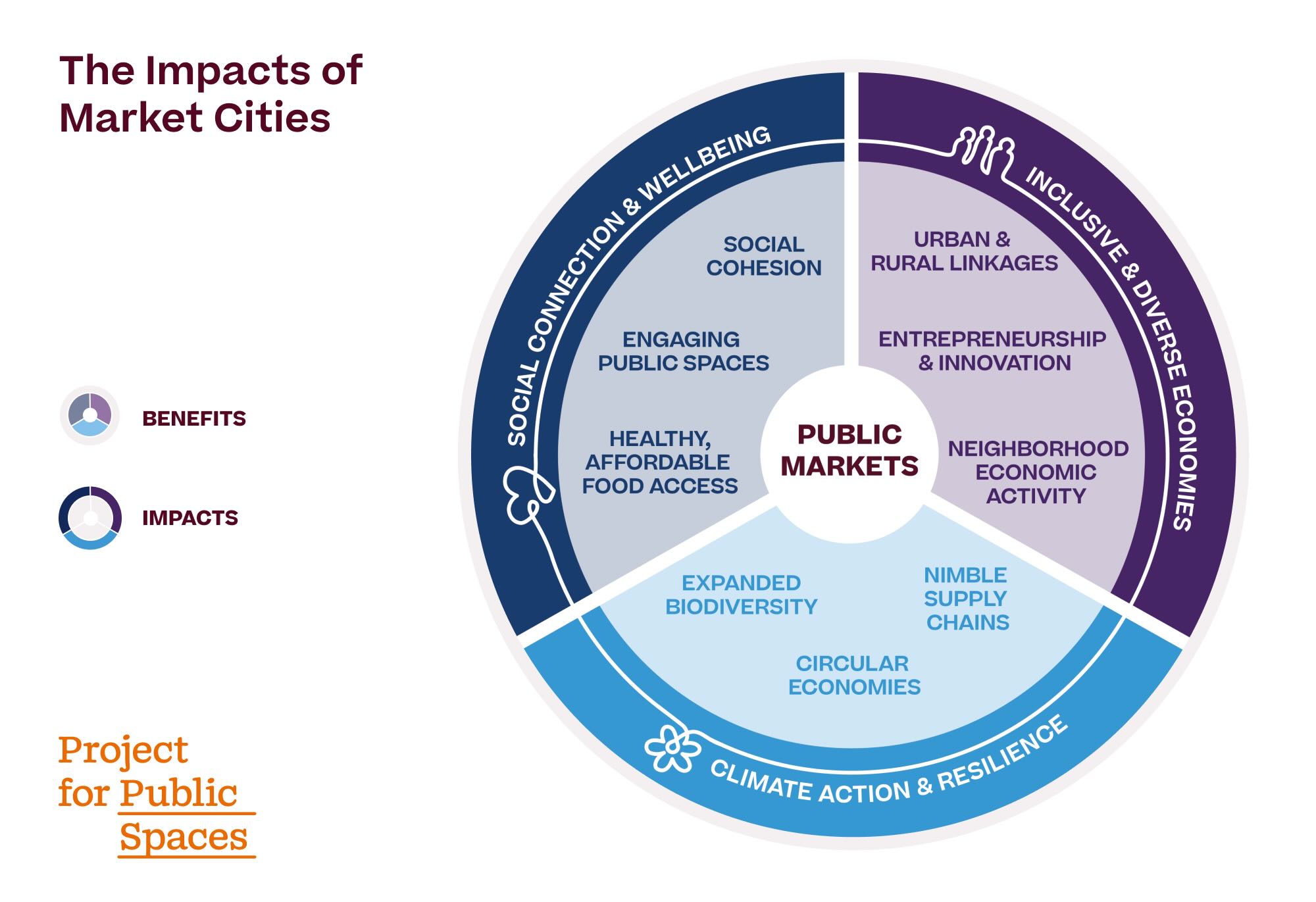
This article, the second in a series exploring the interconnected benefits highlighted in the Impacts of Market Cities framework, examines how public markets promote Social Connection and Wellbeing. By centering human interaction as well as healthy and affordable food access, public markets contribute directly to public health, in body, mind, and spirit.
The food we eat has an enormous impact on how we feel—both in the energy and strength healthy food gives us to live full lives, and in the pleasure that preparing and eating foods we love can bring. And few things bring people closer together quite like a shared meal.
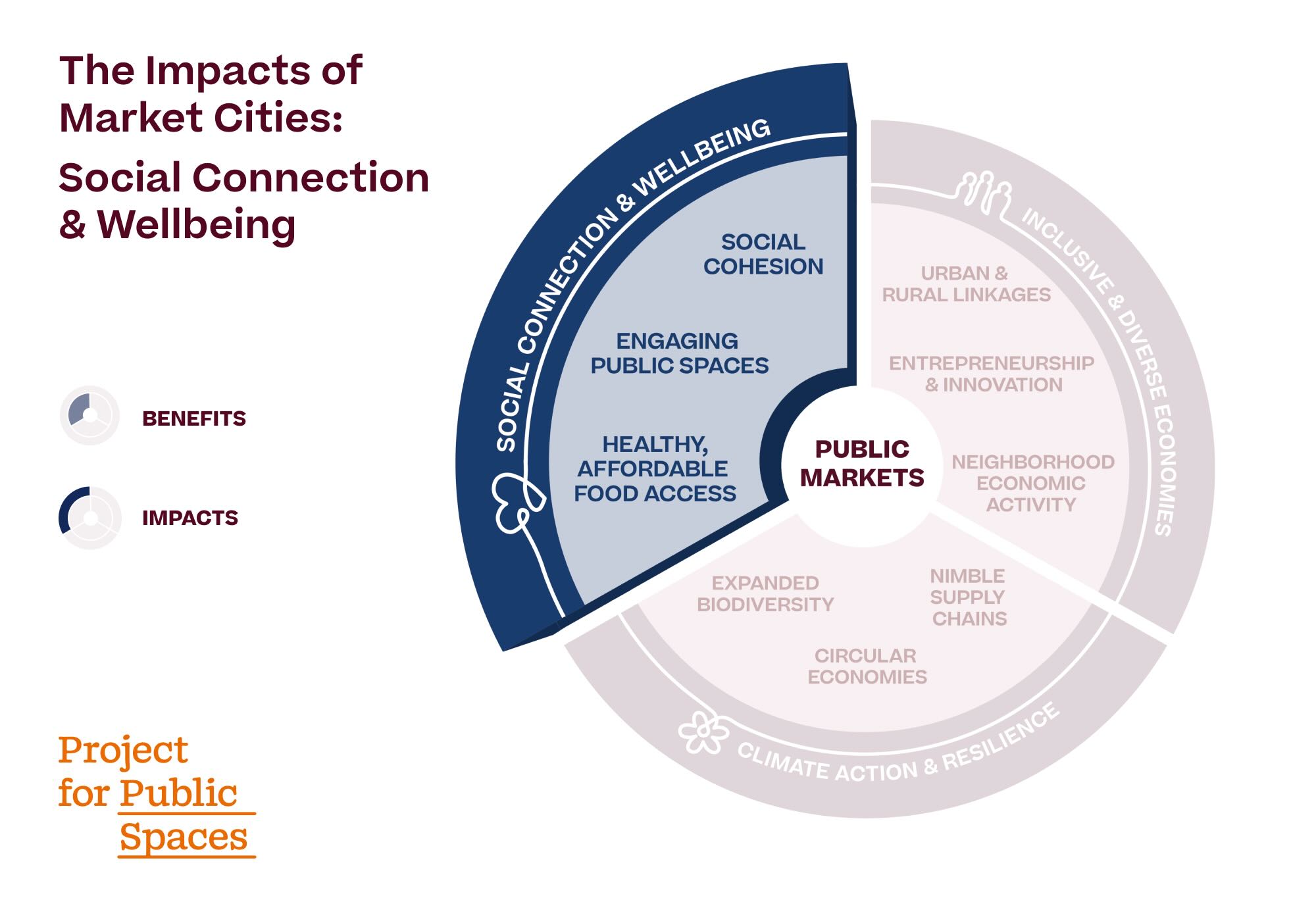
This points to a larger truth: health is about much more than what we eat, or how much we exercise. Human beings are social animals, and connecting with other people has profound impacts on our overall health. One need look no further than the myriad reports in recent years of the stark impacts of the loneliness epidemic throughout much of the Western world to see just how important social connection is to public health. In fact, loneliness can pose health risks as deadly as smoking.
While food is often the star attraction, intentional management can activate public markets as places for more than commerce, but as spaces for vital social interaction and cultural exchange.
One of the greatest strengths of any public space is its ability to bring people from different walks of life together. Being around people with whom we share a physical community builds trust between neighbors, which creates a strong foundation for wellbeing. As places that are woven into people’s routines, markets can foster a sense of community that is cohesive, reflective of local cultural identities, and vibrant.
When the Flint Farmers’ Market shifted operations to a new purpose-built home downtown in 2014, it moved just a half a mile as the crow flies, but a world away in terms of its ability to serve as a community anchor. The market’s move was part of a larger plan to put wellbeing at the heart of a city that has seen more than its fair share of challenges through the creation of a mixed-use Health and Wellness District. The market has since repositioned itself as a true gathering place. In its first year in the new location, it saw 600,000 visitors, up from an average of 275,000 in previous years.

The Flint Farmers’ Market’s success in serving its community is evident in the mix of people who visit. The market sees an unusually high percentage of visitors from outside the city limits, drawing shoppers from across the region, and research has shown that the racial composition of customers mirrors that of the metropolitan area, including a significant number of people coming from low-income neighborhoods. “We have a lot of people from Flint, but since we’re right in the middle of everything, we have a lot of people who work downtown but don’t live here; they live in the suburbs,” explains Market Manager Karianne Martus. “It’s a very unique mix of people coming together to share community—and food.”
On a given day, Martus says, that mix might include office workers on their lunch break, homeless residents looking for a safe place to rest, and, in one of her favorite examples, groups of senior citizens who use the market to plan reunions for high schools across the area. The building was designed with community programming in mind and features three rentable spaces for events. While many markets organize public programs to draw visitors on market days, in Flint the model is flipped, with spaces being rented out on non-market days for everything from baby showers and birthday parties to weddings, memorials, and fundraisers.
In addition to serving as an accessible location where locals can host gatherings to mark important life events, the market has also developed innovative partnerships that reinforce the idea that all are welcome there. This includes working with the nonprofit food hub Flint Fresh to deliver boxes of affordable fresh food to different neighborhoods, as well as collaborating with the city’s Mass Transportation Authority to provide special transit routes that connect low-income neighborhoods to the market, while providing free satellite parking. The market is also unique for being co-located with the Hurley Children’s Specialty Clinic, where a partnership between the two puts the Food is Medicine philosophy into practice and doctors provide parents with ‘prescriptions’ for $15 worth of fruits and vegetables from the market whenever they bring kids in for a checkup.

Another one of the market’s neighbors in downtown’s Health and Wellness District, the Michigan State University’s Department of Public Health, reached out at the height of the Flint Water Crisis to pilot a five-week class for local youth focused on the USDA’s MyPlate diagram, looking for ways to help combat the city’s public health challenges. Today the program, Flint Kids Cook, serves 500 children per year, highlighting how a public market can deepen its community impact by partnering with organizations that broaden who the market reaches and serves.
“Especially in a community like Flint that has been so beaten down over and over again all these years,” Martus says, “it’s really rewarding when people come to the market and say, ‘Wow, this is pretty great.’ It’s fun to see people’s reactions. It really changes the perspective that people have gotten [of Flint].”
“At a grocery store,” says Christine Farren, executive director of San Francisco-based nonprofit Foodwise, “you’ll maybe have a conversation with one person—maybe none, if you do self-checkout. At a farmers market, you’ll have ten conversations at a minimum. It is inherently structured to connect us to each other.”
This gets to the heart of one of the most underappreciated benefits of public markets for health and wellbeing: they are great, people-centric public spaces that encourage a whole host of casual interactions—what Jane Jacobs called the “small change from which a city's wealth of public life may grow.” The effectiveness of a market in engaging its community can be seen in the number of people who turn up on market days and for special events and programs, but also in how the market and its staff respond to community needs.
San Francisco’s Ferry Plaza Farmers Market, managed by Farren and her team at Foodwise for more than two decades, is an excellent example of this. Located in front of the city's Ferry Building, recognizable for its iconic clock tower, the outdoor farmers market operates Tuesdays, Thursdays, and Saturdays, directly adjacent to but distinct from the Ferry Building Marketplace, the commercial retail space inside owned by Hudson Pacific Properties. The relationship is symbiotic: the Ferry Building provides a steady stream of traffic for market vendors thanks to its mixed-use status as a regional transit hub, office building, and tourist attraction, while the farmers market animates the area just outside. The manager of the Ferry Building Marketplace, Jane Connors (known to locals as the “Ferry Godmother”), notes that around 40% of the indoor market’s weekly business occurs during Saturday farmers market days.
The farmers market is known for its Market to Chef program, which capitalizes on the region’s famously robust food culture to provide a significant source of business for vendors. “Early on, we noticed that a lot of chefs were showing up, and we decided that we needed to organize [curbside access] a bit better,” explains Lulu Meyer, who created and runs the program. “Over the years, we’ve added a lot of amenities for chefs.”
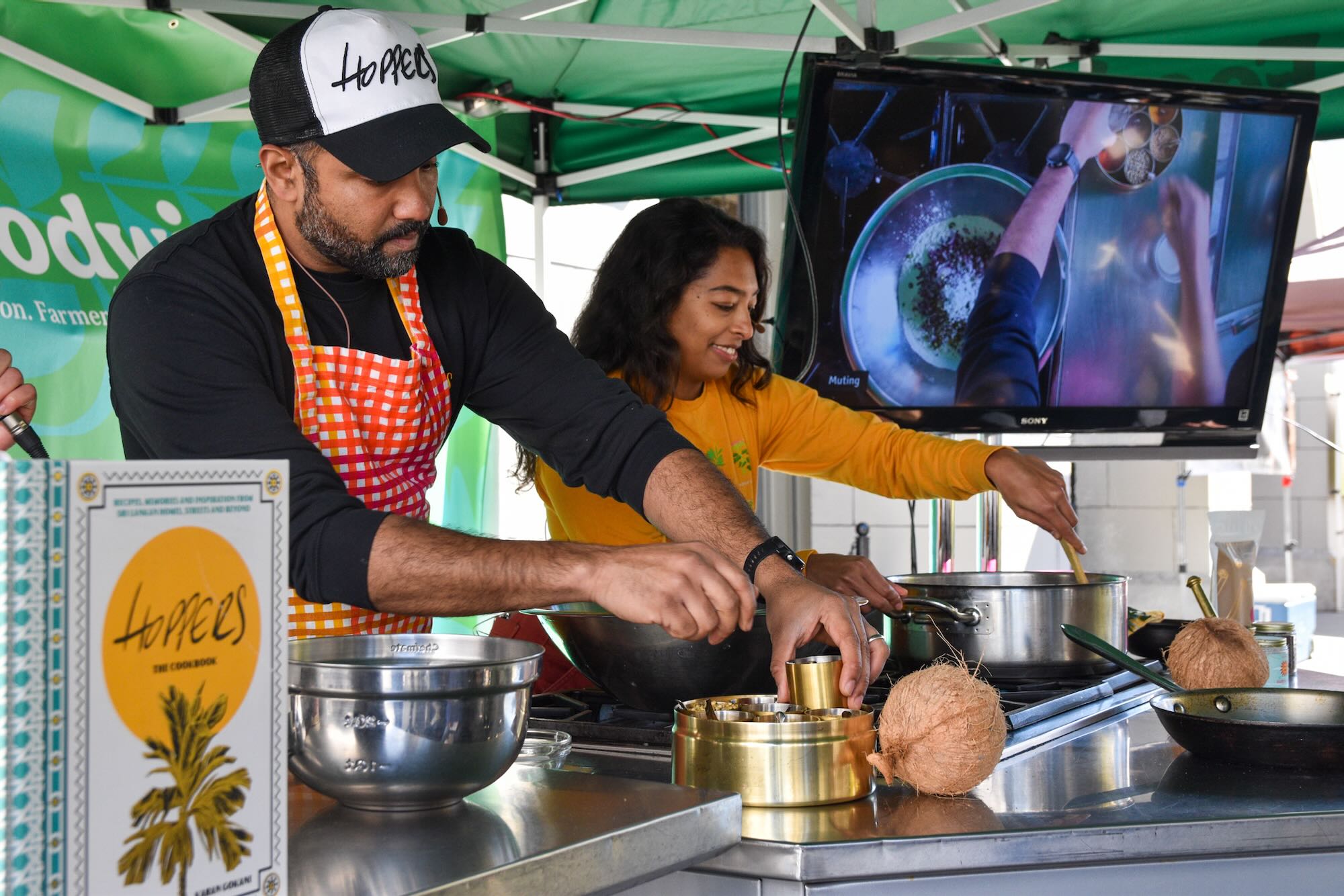
Foodwise has intentionally cultivated a community of chefs who were naturally drawn to the market and have helped define its unique character and contribute to its social atmosphere. Today, the market works with around 300 chefs, with 150-200 showing up every week for the Saturday market. “It’s the only time of the week when they get to kind of hang out and see their friends and colleagues from other restaurants,” Meyer says. “They talk about what they are buying, get inspired by each other, and just reconnect.”
On weekdays, the Foodwise team can focus more on education, which has been core to its mission from the beginning. The market organizes tours and cooking classes that annually serve more than 2,000 local first- through fifth-grade students, and mainly from public Title I schools. A teen-centered program provides high schoolers with nutrition education, as well as cooking and work experience throughout the year. Participants are paid, and they are able to gain real work experience while building stronger relationships with their peers as they prepare and eat meals together. While the weekday markets operate at a loss due to lower foot traffic, they provide Foodwise with a consistent presence in the neighborhood while allowing them to deliver on their larger mission of creating spaces that build community and knowledge, and nurture food and climate solutions.
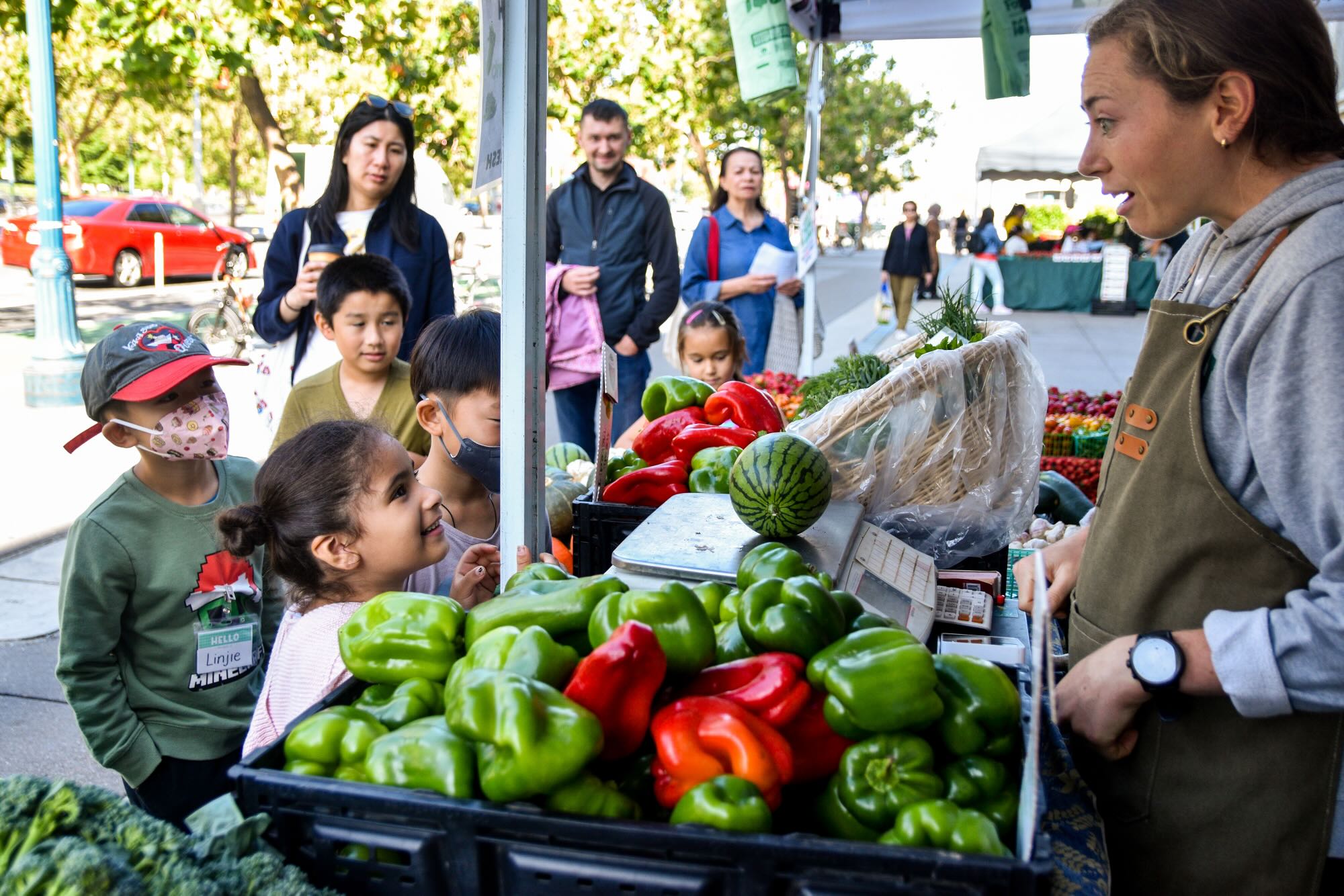
“The psychological framework of the education programs is imbued in all of the rest of our programming,” says Farren. “It’s very prosocial and positive. We’re leading with [the understanding that] humans will lower their resistance and internal barriers to newness or change or something that is different when they’re in a prosocial environment.”
Increasing access to healthy food is one of the most commonly cited benefits of markets. From bustling urban market districts to small weekly farmers markets, these spaces bring growers, producers, and resellers together, providing shoppers with a wide variety of options across many price points. But especially when food costs seem to be rising steadily, and the misperception that eating healthy comes at great cost persists, food affordability is key. As organizations that are equally concerned with the wellbeing of consumers and producers, public markets are incentivized to tackle this issue head-on.

The BC Farmers Markets Nutrition Coupon Program in British Columbia, inspired in part by the SNAP program in the United States, has grown from a small pilot running from 2007 to 2009 into a province-wide initiative that provides fresh food access to over 12,000 households and generates more than $5 million in economic impact for farmers each year.
By sending shoppers directly to farmers markets to buy from local producers (as opposed to SNAP, which includes chain stores and supermarkets), the coupon program creates benefits for people on both sides of the transaction, keeping more food dollars within the province. Approximately $2 million of the Program’s annual budget circulates as coupons redeemed at markets, which are distributed by almost 250 civil society organizations that BC Farmers Markets partners with to reach households in need of assistance. Participating households typically receive $27 per week that can be used at farmers markets. But according to the Coupon Program’s Manager, Peter Leblanc, each time someone visits a market, they spend an additional $10, on average, to the additional benefit of the market’s vendors.

Beyond making fresh food more affordable for lower-income and at-risk populations, the program has increased the variety of groceries available to all of the market’s customers by drawing in a more diverse customer base, whose demand for new ingredients has inspired more farmers to extend their growing season, sometimes extending market schedules all the way into December. “We have a whole batch of customers now who probably wouldn't go to a market normally because it was out of reach for them, or it wasn't something that had occurred to them,” says Leblanc. “But all of a sudden they’ve received this benefit that sends them to the farmers market.”
Leblanc and his team have worked with farmers and managers at participating markets across the province to ensure that they are ready for the new shoppers that come with coupons, helping to troubleshoot and address common barriers that may make a space feel less welcoming. This has included re-thinking access for shoppers with physical disabilities or long-term health issues and creating stroller-friendly conditions for young families. By looking beyond the financial impact of coupons, BC Farmers Markets encourages participating markets to think more proactively about welcoming visitors from a wider range of backgrounds. In this way, the program becomes a lever for creating more inclusive, socially connected places.
–
At their best, public markets are places where people come not just to buy food, but to feel seen, connect, and belong. The everyday interactions between vendors and shoppers, neighbors and newcomers, build trust and familiarity in ways few other public spaces can. As cities look for meaningful ways to support community wellbeing, public markets offer a powerful, proven model: invest in places that nourish both people and relationships, and the benefits will ripple far beyond the market itself.
We will continue our series on the Impacts of Market Cities over the next year with our next impact area: Climate Action & Resilience. We hope this series helps equip market leaders to tell the story of what markets do and why it matters.
You can read the first in our series, “Impacts of Market Cities: How Market Cities Build Inclusive & Diverse Economies.”
The rich text element allows you to create and format headings, paragraphs, blockquotes, images, and video all in one place instead of having to add and format them individually. Just double-click and easily create content.
The rich text element allows you to create and format headings, paragraphs, blockquotes, images, and video all in one place instead of having to add and format them individually. Just double-click and easily create content.
Body Text Body Link
The rich text element allows you to create and format headings, paragraphs, blockquotes, images, and video all in one place instead of having to add and format them individually. Just double-click and easily create content.
Here is some highlighted text from the article.

Headings, paragraphs, blockquotes, figures, images, and figure captions can all be styled after a class is added to the rich text element using the "When inside of" nested selector system.
Headings, paragraphs, blockquotes, figures, images, and figure captions can all be styled after a class is added to the rich text element using the "When inside of" nested selector system.
Headings, paragraphs, blockquotes, figures, images, and figure captions can all be styled after a class is added to the rich text element using the "When inside of" nested selector system.

We are committed to access to quality content that advances the placemaking cause—and your support makes that possible. If this article informed, inspired, or helped you, please consider making a quick donation. Every contribution helps!
Project for Public Spaces is a 501(c)(3) tax-exempt organization and your donation is tax-deductible within the guidelines of U.S. law.

.avif)