Close Menu
Menu
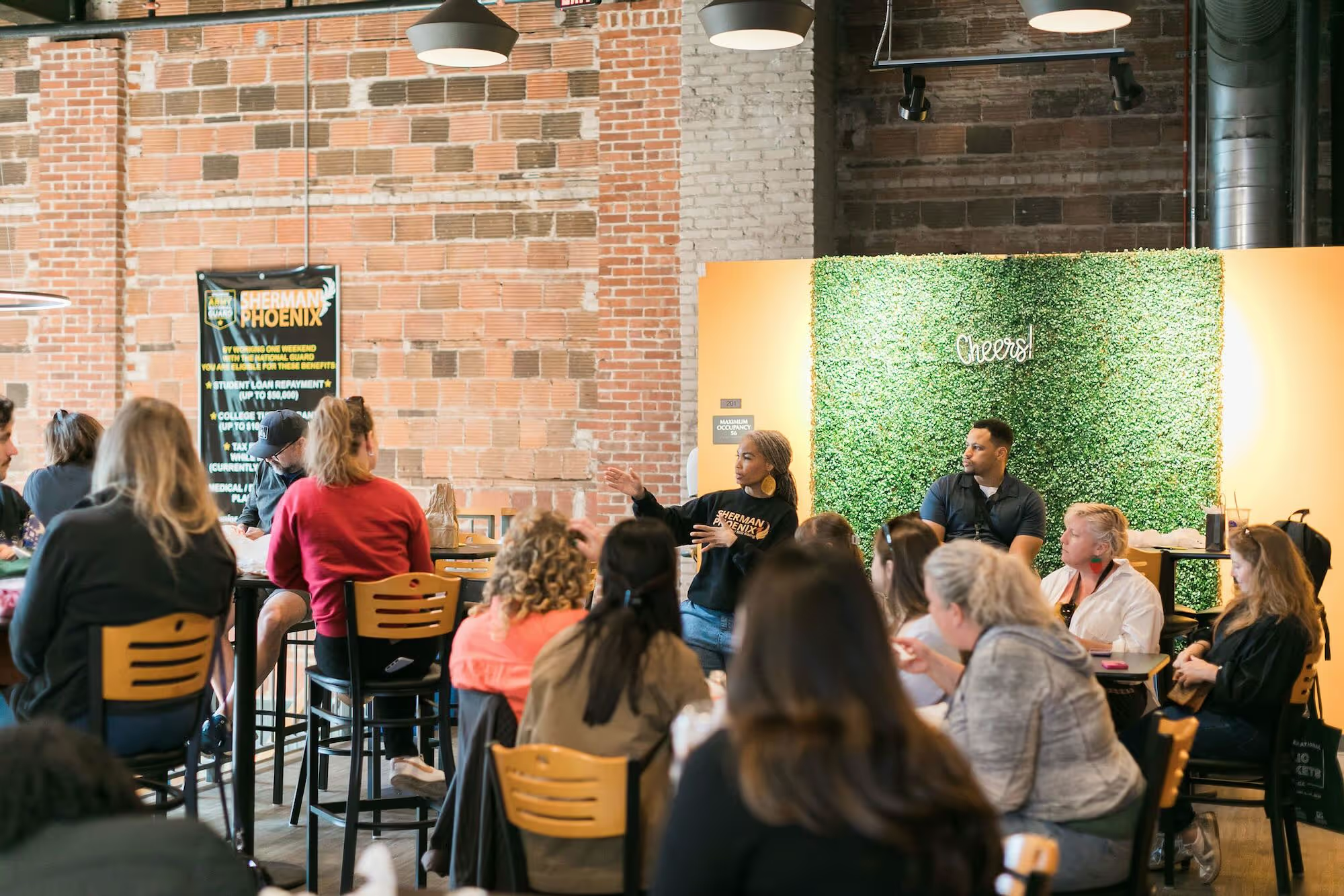
While third places disappear from communities nationwide, teens aren’t waiting for adults to hand them a solution. Project for Public Spaces has been receiving an influx of inquiries from young people across the country who want to understand why they’re losing the places where previous generations have once gathered freely, and what that means for teens today who have nowhere to gather. Whether they are writing research papers or reporting articles for school newspapers, teens are asking us: “Why is there such a lack of dedicated teen spaces?” “Why are teens excluded or banned from hanging out in public spaces?” More importantly, they want to learn what makes a successful third place, and what they can do to get them back.
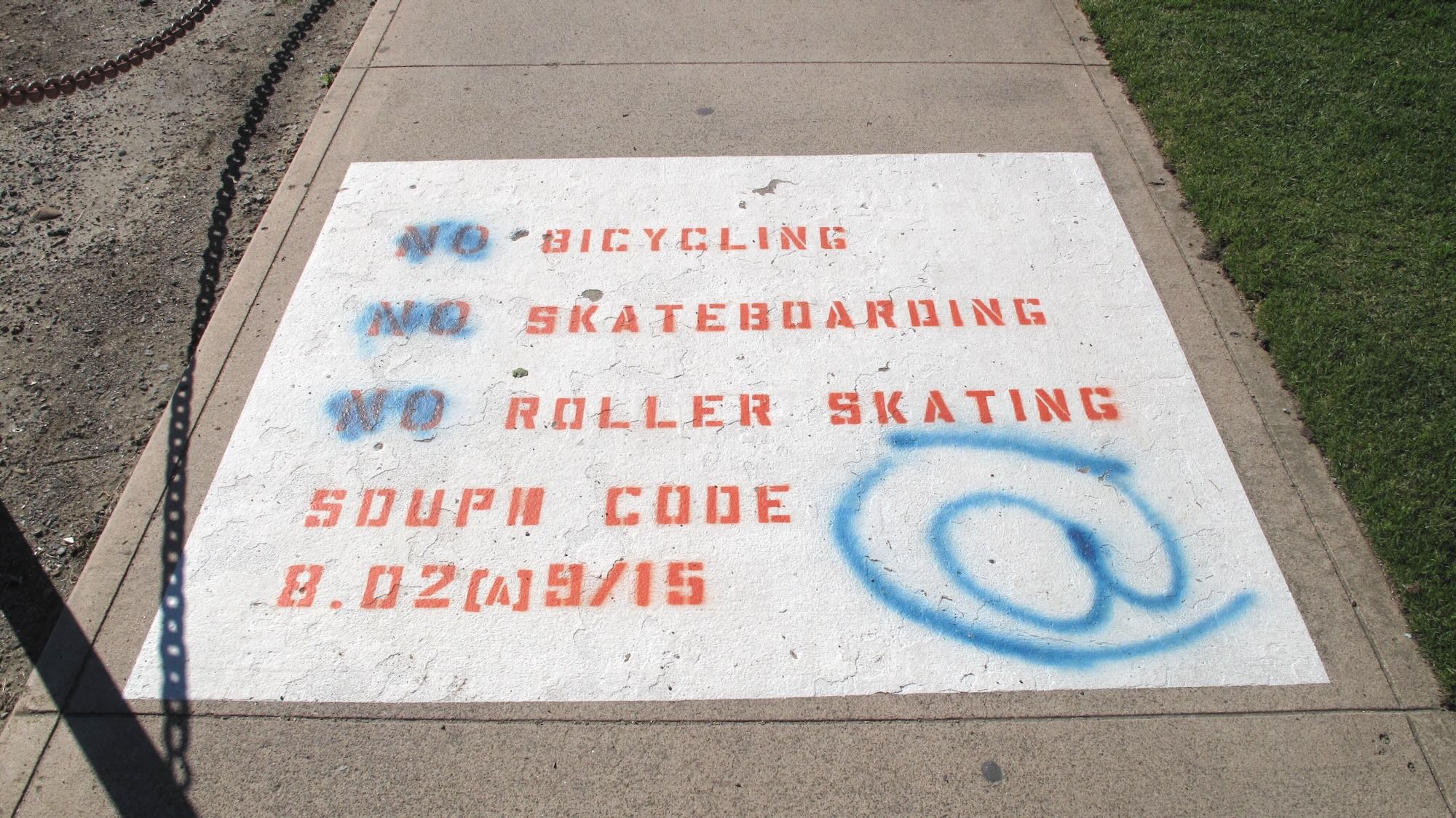
For Larry Garcia, a tenth grader in Madison, Wisconsin, the motivation behind outreach was personal. He contacted PPS while working on a school health project about advocacy and shared stories of unpleasant encounters with security and business owners simply for existing in public: “A few times while I would hang out at the mall with my friends, the mall police would kick us out because of the Youth Escort Policy, which doesn't allow minors to be in the mall without an adult.” Another time, “Me and my girlfriend tried to hang out in front of a local grocery store but we were told to leave because we were ‘being disruptive,’ even though all we were doing was standing outside and having a conversation.”
Larry’s story is one of many, and it points to a larger problem: for today’s teens, there are almost no places left where they can simply show up and spend time.
Business owners’ and local authorities’ wariness of teen hangouts is an obstacle for teens to gather, but it isn’t new. Negative stereotypes around their behavior in public have likely helped accelerate the loss of third places. Shops and restaurants often discourage teens from lingering, fearing they’ll drive away older customers, while many public spaces have rules that target activities teens enjoy, like skateboarding and basketball. The message is clear: teens aren’t welcome.
As they’re pushed out, many are growing more isolated, as reported by the World Health Organization, which found that the highest loneliness rates are among teens, especially in low- and middle-income communities. Some turn to social media to connect, fueling disruptive gatherings like “teen takeovers,” which have prompted some communities to impose curfews. However, this cycle of seeking freedom and space can’t be solved with rules alone. Without a place to meet their needs for “novelty… autonomy… social belonging and identity formation,” as Bridget Marquis, Director of Reimagining the Civic Commons and PPS Board Member recently wrote, young people often seek connection on their smartphones.

While some are quick to blame worsening mental health squarely on screen time, teens turn to their phones because there is simply nowhere else for them to go, leaving a generation without the face-to-face interaction that makes for a fulfilling social life. As Marquis put it, it is more realistic to see increased screen time and social media use as a symptom of a wider problem: a public realm that often works against teens, leaving screens to fill the gap. Unfortunately, they are looking for more and better ways to connect with their peers and coming up short. What they need are sociable public spaces that invite them to get involved and invested in keeping them up and running.
So long as teens continue to lose third places, curfews and debates about smartphones alone won’t address the underlying issues. In the broader effort to protect and create third places, adults must give young people the space to grow, interact, and cultivate social connections in their own way. Decision-makers need to platform their ideas, let them lead, and give them the chance to make public spaces better for people of all ages, and especially theirs.
Most people want to feel a sense of agency in the spaces where they spend time—a sentiment that is particularly heightened in adolescence, when one really gets the chance to explore their independence. This is why when teens lead the placemaking process, the results are public spaces where they actually want to hang out.
A skatepark located within New York City’s Riverside Park proves the power of youth-led placemaking. The project began in 1996, when skateboard legend Andy Kessler advocated for a dedicated space for skateboarding to park administrators. In turn, the administrators partnered with the Salvadori Center to gather a group of young people and imagine a new skate park. Throughout the project, the park turned into their outdoor classroom, where they got to know one another, earn a stipend, and work together to dream up ideas that would eventually be incorporated into the actual design.
As a nonprofit educational organization focused on supporting students in exploring math, science, and design, the Center encouraged the students involved to work with teachers and engineers as they built models out of balsa wood. Trenton Price, Executive Director of Salvadori Center, explains that the “real-world design challenge” gives young people a new sense of stewardship over the space, especially because they saw the project through from start to finish.
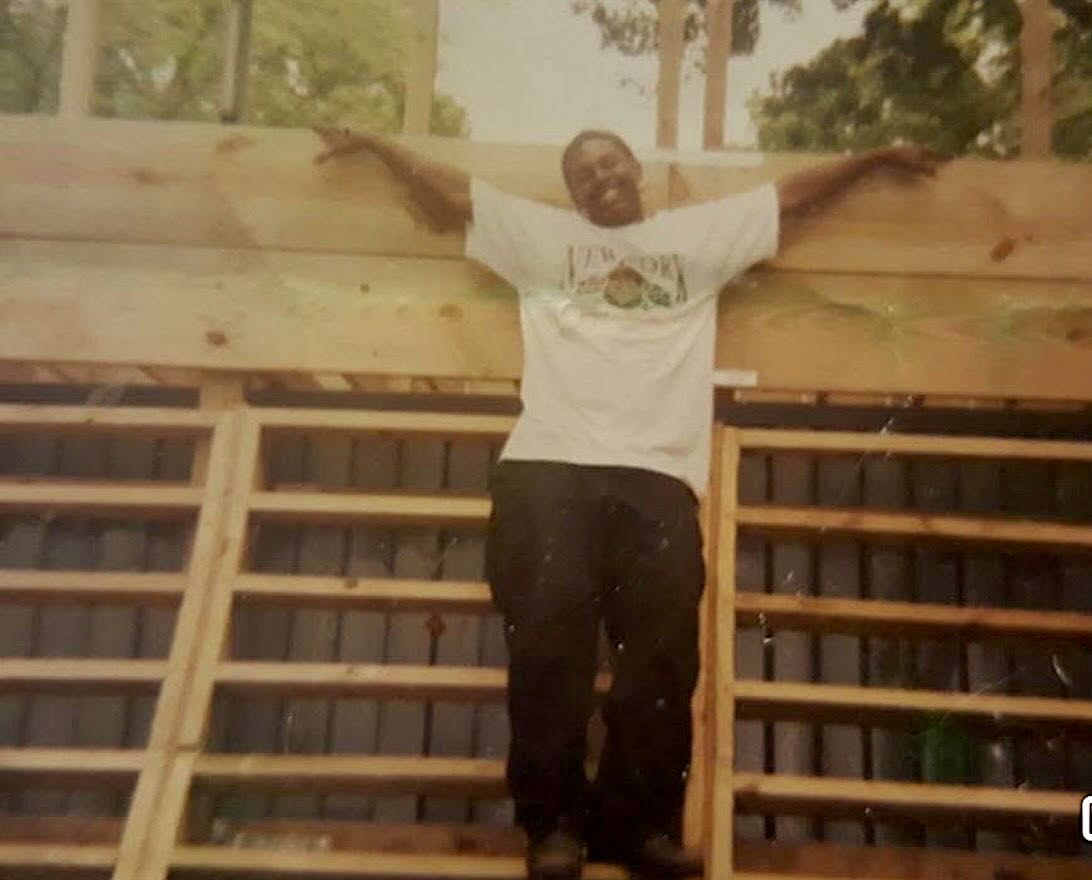
The collaboration was transformative for the space as well as for the youth involved. One of the students who took part in the project, Christopher Jivers, reached out to PPS after coming across an old case study about it on our website. He maintains that his work on the skatepark was an experience that guided many of his subsequent life and career goals. “The program fundamentally broadened the trajectory of my life by shifting my perspective on systems and design,” he said. “It proved the impact of investing in teenagers—giving us real structure and showing us our true potential through the hands-on mastery of geometry, physics, and structural design.” Reflecting on his current career as an entrepreneur 30 years later, Jivers still sees the project and the skills he learned that summer as a blueprint for his adulthood. Renamed Andy Kessler Skate Park, the space was reconstructed and reopened in 2021, and continues to serve as a vibrant third place for young skateboarders and in-line skaters, playing a major role in the city’s skate culture.
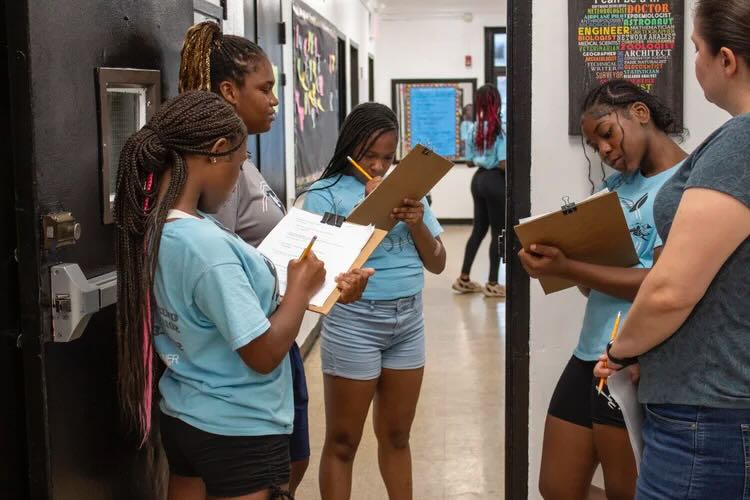
More recently, the Salvadori Center has collaborated with the Public Housing Community Fund to give young people the opportunity to design their own community rooms in New York City Housing Authority (NYCHA) buildings. In this hands-on, youth-led activation, Price notes the in-depth community work involved. ”The students engage with and survey the community to hear from diverse stakeholders about what they need in the space,” says Price. From there, they lay out a redesign with floor plans and models, making the case for their vision to leaders and project partners.

“When young people are given the responsibility for community design,” says Price, “They take that leadership seriously. Many youths have talked about wanting spaces that reflect them and their communities while also wanting calm places to relax after school… It is an even more powerful experience when they see that they can make a difference in their community using the built environment.”
By treating young people as problem solvers, rather than simply a stakeholder group, this initiative not only connects teens with one another and their neighbors, but also gives them the tools to imagine and argue for an upgrade to their shared spaces.
Through Project for Public Spaces’ Community Placemaking Grants with General Motors, New York-based advocacy nonprofit Open Plans received $100,000, along with planning, implementation, and capacity building assistance from PPS, to turn Clarkson Street in Manhattan into a safe third place for the middle and high school students of City-As-School (where M560 and P.S. M721, the Manhattan Occupational Training Center, are co-located), who share a building that has no gym and is currently under construction. For these students, the street outside—which is often treated as a through-way for cars to get to the Holland Tunnel—is the only open space for recreational activities.
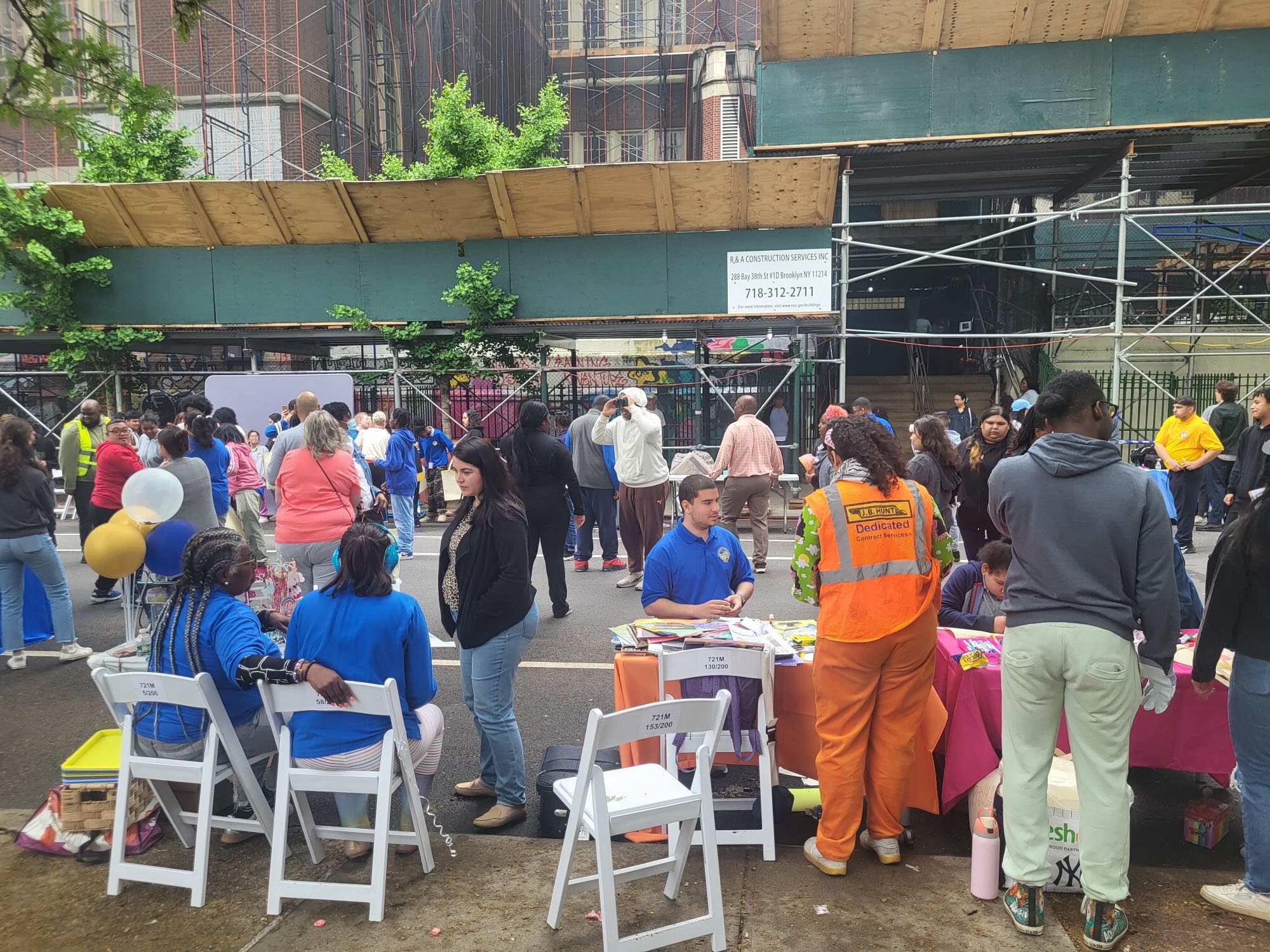
Expanding upon the ongoing success of NYC Department of Transportation’s Open Streets for Schools program, the placemaking project resulted in a transformation that was shaped by the students themselves. The visioning sessions and more than a year of conversations with students, administrators, and neighbors gave young people a voice to identify the elements they wanted to see and weigh in on how their street would work for them, resulting in the design and installation of New York City's first permanent swing gate for a school, a communal gardening space, attractive planters, and soon, street seating for a place to hangout. At one of the schools, P.S. M721, a specialized public school for students with diverse learning needs and disabilities, their Special Olympics basketball team used to roll out hoops into the lobby in order to practice. Now with expanded access onto the street, school staff are able to maintain visibility of the students, which had not been possible at the nearby park. The inclusion of teen input in the placemaking process was a game changer, making more space safe and accessible.
Video Above: City-As-School students and staff, Opens Plans, Project for Public Spaces, and the NYC Department of Transportation come together to test out the newly installed permanent swing gate for a school street, the first of its kind for NYC. Credit: Streetfilms on YouTube
“You don’t want to be stuck in a classroom for eight hours a day,” said Alex Rodriguez, a high school senior and an Open Plans intern who helped host school block parties and conducted surveys and research in 2025. “You want to go outside. You want to breathe air. I think the most important part is connecting with your classmates.”
The streets outside schools are among the most overlooked opportunities to give teens the welcoming, flexible places many have lost. According to Sabina Sethi Unni, Open Plans Community Planner, over 370 public schools in New York City lack on-site recreation space. As the first permanent swing gate for a school street in the city, the installation at Clarkson Street serves as a pilot. If successful, it can serve as a model for so many other school communities to provide open space.
Young people are one of the main visitor groups to New York City’s Gotham Park. For Megan Brosterman, the park’s Chief Operating Officer, this is why its first public space design project, Grass Roots Planters (“GRooP”), “had to be led by local students, not design professionals.” The teens were tasked with creating multi-use planters, some of which incorporated seating or other amenities like skateboarding elements. After carrying out consultations with a wide array of stakeholders, the young people have come up with a prototype that is now in production.
Video Above: Urban Assembly Maker Academy students talk about participating in Gotham Park's GRooP (Grass Roots Planters) internship. Source: Gotham Park on YouTube
Though young people led the charge on the interventions, the result will be a space that works better for people of all ages. “Our young people have a unique capacity to empathize with a diversity of groups whose needs may be very different from their own,” says Brosterman. But first, as is the case at Gotham Park, decision-makers must demonstrate trust and confidence in their abilities.
Even beyond the planters, young people are meaningfully included in the operations of Gotham Park. Co-Founder and President Rosa Chang considers them valuable members of the team, building on their knowledge with paid internships and a Youth Ambassador program.
“Young people know their neighborhoods intuitively,” says Chang. “They know which corners feel safe, which ones don't, where they feel welcome and comfortable hanging out, and where there's nowhere to sit for ten blocks. At Gotham Park, we pay high school students to do real work… That's not outreach—that's a seat at the table, with the respect of a paycheck. The result is a place that doesn't have to be explained to the people it's meant for because they are daily users, and are part of guiding its evolution.” By including them in ways other places do not, Gotham Park encourages a sense of care and duty in young people for the spaces they use.

To Chang, our communities and spaces form our worldview. As much as we build and rebuild our places, our places “build future generations of us.” So when public spaces and the organizations that manage them invest in the social lives and leadership of younger generations, they usually reinvest that energy back in the community.
We’ve seen that if given the chance, teens can steer conversations about building and improving public spaces for everyone. But for communities where there seems to be no existing infrastructure to support new initiatives for involving teens, where do we start? We have to remember that it “takes a village,” which includes parents, teachers, neighbors, and community leaders to advocate for more funding to build physical and social infrastructure for the purpose of helping teens find their sense of belonging.

Fortunately, word is spreading about the crisis of third places and its effects on young people among government officials who are taking note and working on expanding recreational offerings. In response to teen takeovers, Detroit’s Occupy the Summer program invested $1.5 million to extend open hours at recreation centers, host weekly Friday neighborhood events, a basketball league for young adults, and more. Meanwhile, Congresswoman LaMonica McIver’s proposed RESTORE Third Spaces Act would establish a $200 million federal pilot grant program to rebuild and improve public third places. Senator Chris Murphy’s In Real Life (‘IRL’) Act would tax ad buys from the biggest social media giants to help pay to rebuild what actually brings us together: parks, libraries, rec centers, and local gathering places. If passed, these proposals would help build the brighter future teens are asking for.
Again and again, young people have demonstrated that they have the ability to help tackle the root of the teen loneliness problem—if adults can learn how to hand over the wheel.
The rich text element allows you to create and format headings, paragraphs, blockquotes, images, and video all in one place instead of having to add and format them individually. Just double-click and easily create content.
The rich text element allows you to create and format headings, paragraphs, blockquotes, images, and video all in one place instead of having to add and format them individually. Just double-click and easily create content.
Body Text Body Link
The rich text element allows you to create and format headings, paragraphs, blockquotes, images, and video all in one place instead of having to add and format them individually. Just double-click and easily create content.
Here is some highlighted text from the article.

Headings, paragraphs, blockquotes, figures, images, and figure captions can all be styled after a class is added to the rich text element using the "When inside of" nested selector system.
Headings, paragraphs, blockquotes, figures, images, and figure captions can all be styled after a class is added to the rich text element using the "When inside of" nested selector system.
Headings, paragraphs, blockquotes, figures, images, and figure captions can all be styled after a class is added to the rich text element using the "When inside of" nested selector system.

We are committed to access to quality content that advances the placemaking cause—and your support makes that possible. If this article informed, inspired, or helped you, please consider making a quick donation. Every contribution helps!
Project for Public Spaces is a 501(c)(3) tax-exempt organization and your donation is tax-deductible within the guidelines of U.S. law.