The Placemaking Round-Up
A biweekly newsletter with public space news, resources, and opportunities.
The Biweekly Bazaar
A curated dispatch on all things public markets plus the latest announcements from the Market Cities Program.
A biweekly newsletter with public space news, resources, and opportunities.
A curated dispatch on all things public markets plus the latest announcements from the Market Cities Program.
Detroit, Michigan, USA, has been many things to many people: an industrial powerhouse, a city of middle-class opportunity, a city in crisis, but more recently, a model of public space-led renewal. If you've been following the placemaking world, you already know that Detroit doesn't just talk about resilience—it lives it.
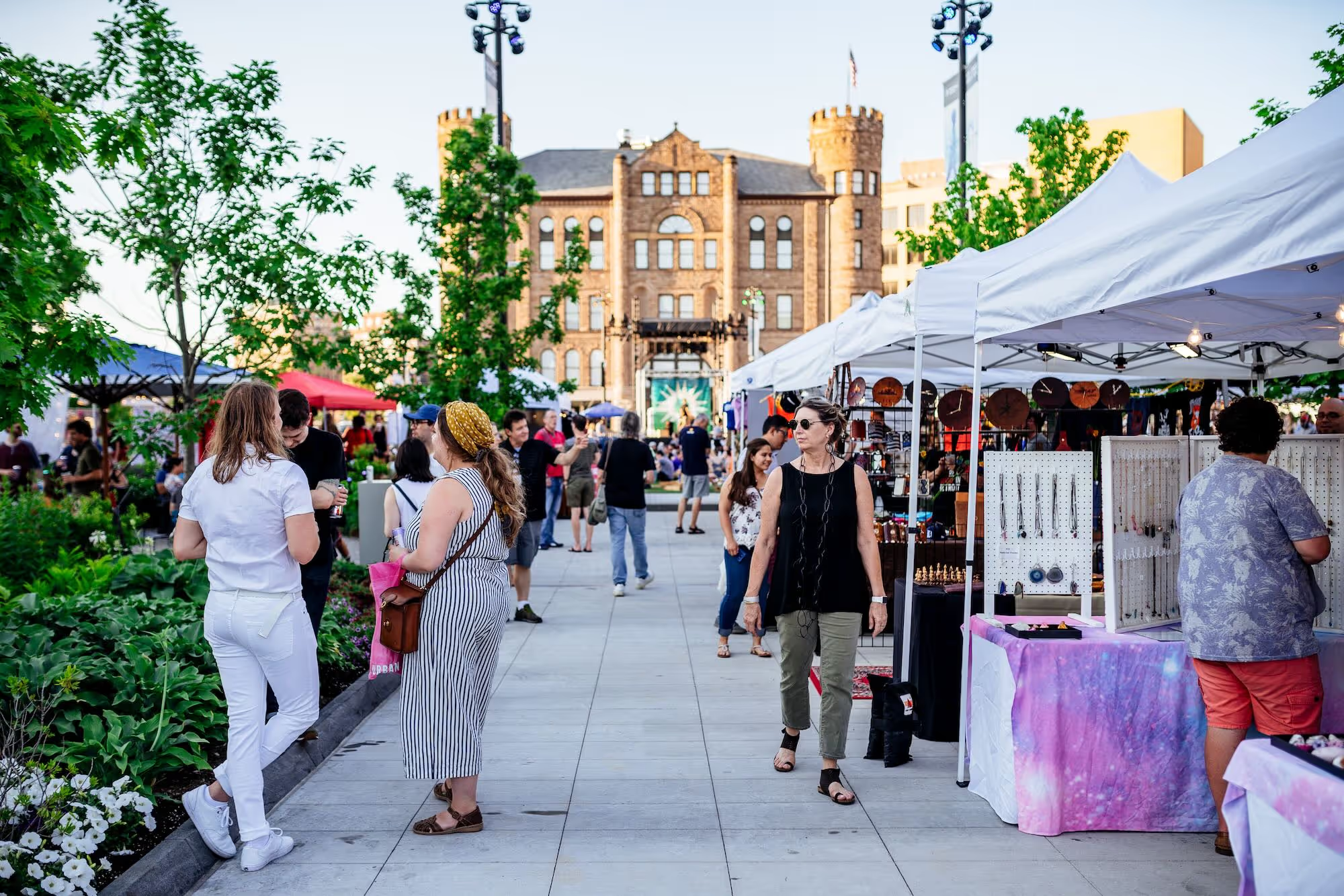
Along with our co-host, Downtown Detroit Partnership, Project for Public Spaces is excited to bring the 5th International Placemaking Week to Detroit this year and explore the living laboratory that it is today. Sparked by Detroit’s story, the theme for this year’s conference, “From Recovery to Resilience through Placemaking,” serves as a reminder of the power of placemaking to help cities meet the many challenges of our world today. This year's flagship placemaking event unfolds over three days, featuring plenaries and breakout sessions, mobile workshops, and networking events. Attendees will discover the public spaces that have made the city one of the leading urban innovators of our time.
A friendly reminder that we sold out of tickets at our last Placemaking Week in 2024. So if you're on the fence about attending, don't wait to secure your spot! Early registration closes on Monday, March 30 at 11:59pm ET.
This article explores some of the venues and placemaking initiatives we’re looking forward to visiting and learning more about—and you should be too! From a legendary food market to a beloved riverfront, these Detroit gems are front and center at this year's conference—and they've got stories worth hearing.
A Note About Mobile Workshops
Known as the “conference without walls,” Placemaking Week is unique for its hands-on and innovative experiences, including mobile workshops, where attendees venture out to experience real spaces firsthand and meet the placemakers behind them. Each conferencegoer selects one mobile workshop to attend. Some of the spaces highlighted below are just some of these venues for mobile workshops, and are noted as such. See the full list of mobile workshops.
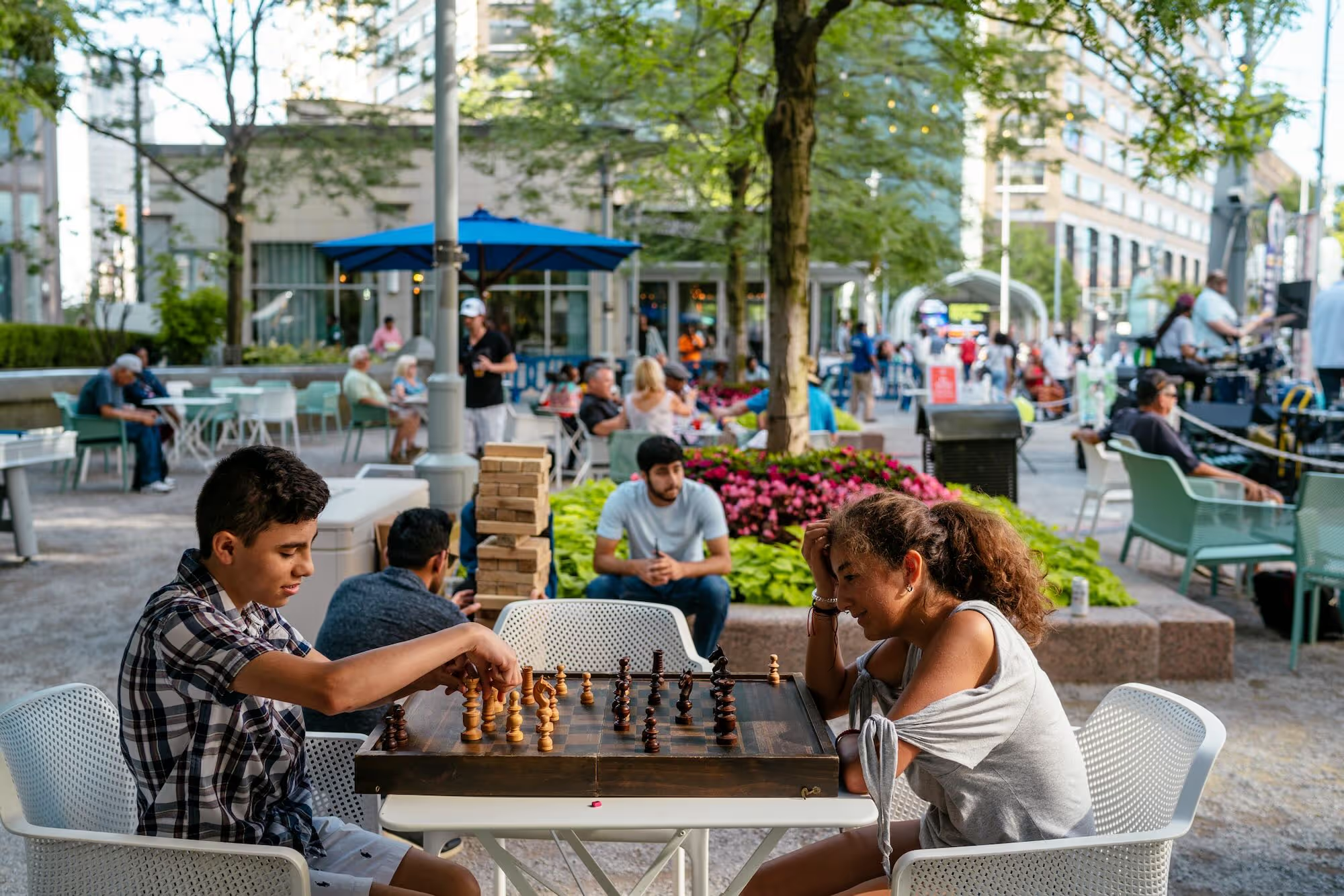
Detroit's resurgence is perhaps best told through the iconic spaces that have redefined what a city can become. Campus Martius Park was the spark that started it all: a national model for urban revitalization brought to life over 20 years ago through a bold public-private partnership forged between the Downtown Detroit Partnership and the City of Detroit. What was once an underutilized congested intersection is now a year-round civic hub that hosts over 1,200 events and activities in just one year.
Campus Martius proves that a single well-maintained or cared-for public space can shift the trajectory of an entire city, inspiring countless other placemaking initiatives that not only boost economic recovery but embody the local cultural spirit that makes Detroiters proud. Having helped create the original vision for the park in 1999 and the seasonal Beach at Campus Martius Park in 2013, Project for Public Spaces is thrilled to return to this space as a prominent conference venue!

Then there is Michigan Central, a Venue Partner for Placemaking Week, a dramatic symbol of Detroit's determination to rise back to the top. When it opened in 1913, it was the world's tallest train station and a hallmark of Detroit at the height of the city’s industrial prowess. However, due to the decline of rail travel, the station experienced a sharp deterioration in use and upkeep, sitting vacant for decades.
Driven by Ford's vision of Detroit as a global hub for the future of transportation, Michigan Central has been reborn as a 30-acre innovation campus—anchored by the restored Beaux-Arts station, whose 18-story office tower and vast concourse have been reimagined as collaborative labs, maker spaces, and flexible work environments—functions as an open platform where entrepreneurs, engineers, and emerging technology companies converge to develop breakthrough mobility solutions.
On the first day the conference, Michigan Central will host a mobile workshop where participants will engage with project leaders and tour key sites—including Newlab Detroit, housed in the nearby Book Depository Building, new public green spaces, and future locations of a multimodal transit hub—to learn how design and technology are working together to create a seamless, human-centered environment. On the second day of the conference, Michigan Central and Newlab Detroit will serve as the venue for a plenary and breakout sessions, where all Placemaking Week attendees can experience this transformation firsthand.

Stretching 982 acres across the Detroit River, Belle Isle—affectionately called “the Jewel of Detroit”—is the largest urban island park in the U.S., spanning nearly 200 acres more than New York City’s Central Park. Designed in the late 19th century by Frederick Law Olmsted, Belle Isle is known for its access to nature, outdoor recreation, cultural landmarks, and community gathering. It is home to the oldest public aquarium in the U.S., a conservatory, a museum, a beach, and more. In January 2026, Belle Isle Conservancy launched an initiative spotlighting the park's recreational offerings—hiking, biking, swimming, and fishing—under the banner of “Detroit's Backyard.”
In a mobile workshop, Belle Isle Conservancy, Michigan Department of Natural Resources, and Gehl will lead a guided observation and dialogue focused on how to balance stewardship, access, and belonging.
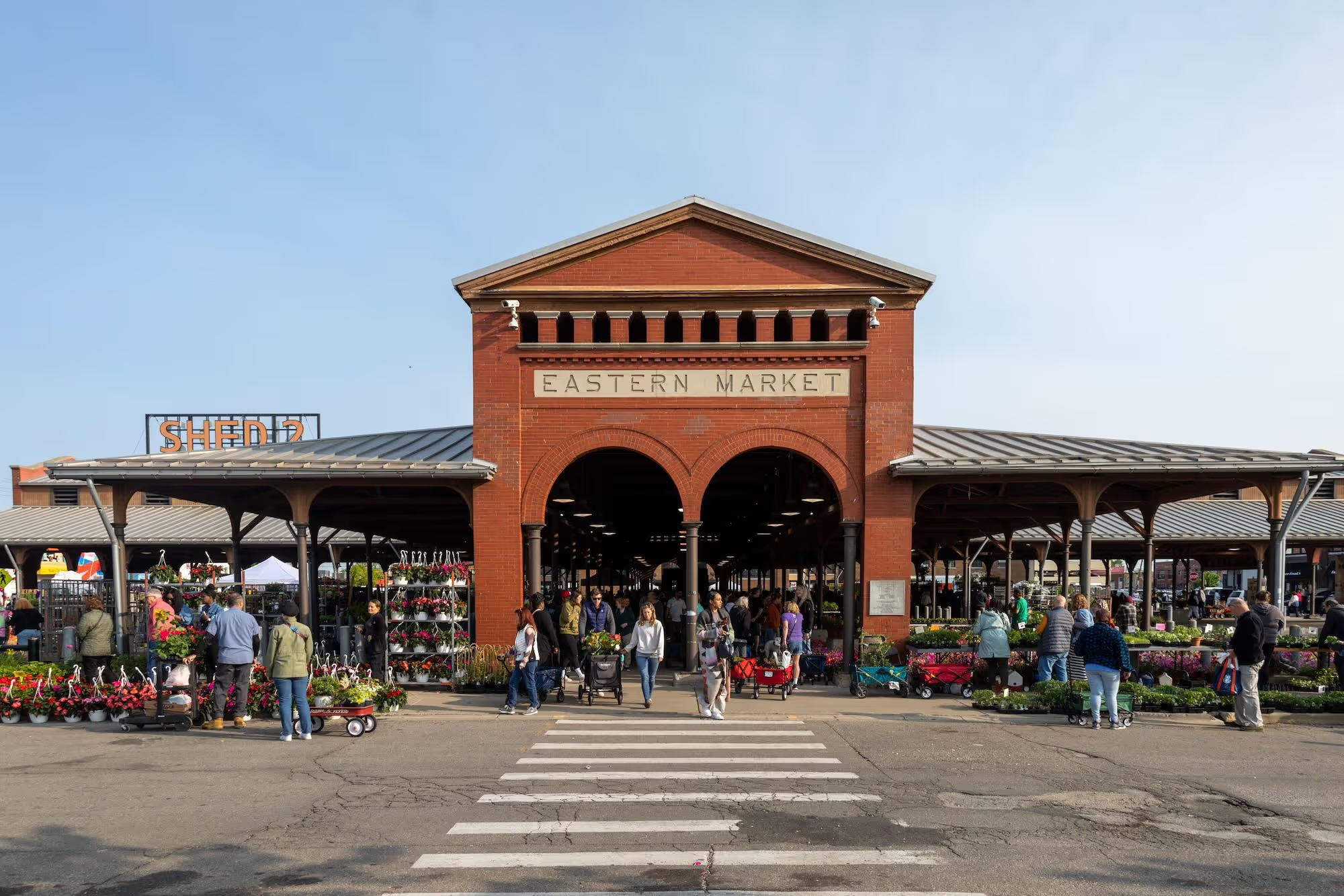
Eastern Market is one of America's oldest and largest public markets and living proof of how a marketplace can become an economic engine. Started in the 1880s as an informal market atop a former cemetery, this site was officially designated as a market in 1891 thanks to its tremendous growth. After weathering a significant period of decline in the 1960s, Eastern Market has emerged as one of the most successful public markets in the world, celebrated for its cutting-edge approach to food entrepreneurship and economic inclusion.
Placemaking Week attendees can learn more about this story and see the market’s current innovations firsthand on one of our mobile workshops. The session offers an inside look at how the Market is cultivating the next generation of food entrepreneurs through its Shed 5 Incubator Kitchen and Metro Accelerator program. Market leaders will walk attendees through their wholesale operations and share the spatial strategies that have transformed Eastern Market’s surrounding food district into a thriving economic hub.
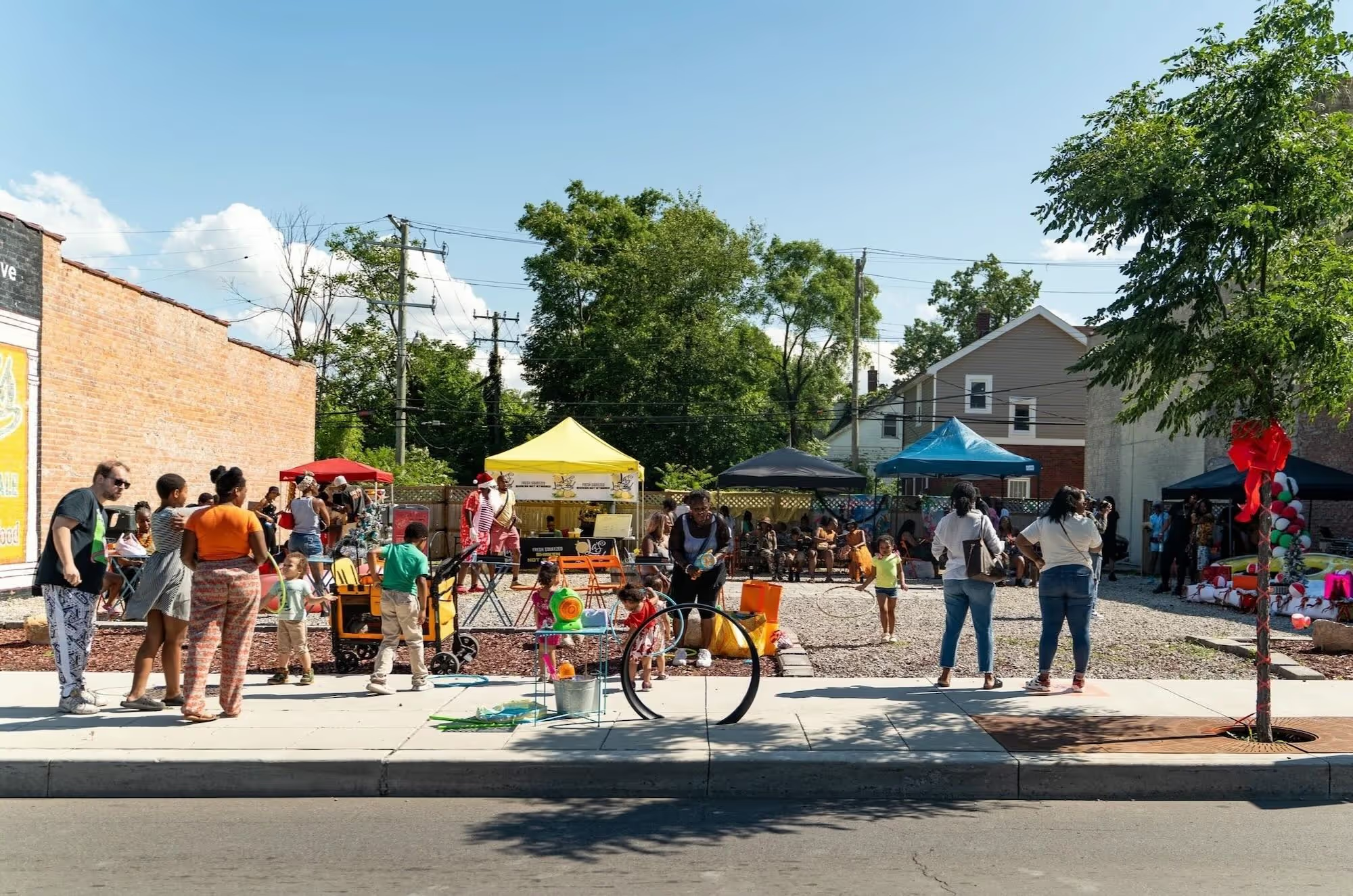
At a moment when trust in institutions and in one another is eroding across America, Detroit's Fitzgerald neighborhood offers a compelling counter-narrative. The conference offers an opportunity to join Live6 Alliance and Reimagining the Civic Commons on a mobile workshop to experience Fitzgerald’s civic commons in person. Participants will explore how cross-sector investment and intentional placemaking are rebuilding social bonds and neighborhood vitality through neighborhood parks, greenways, storefronts, and gathering spaces—co-created by the residents of Fitzgerald and Northwest Detroit. This is placemaking at its most purposeful.
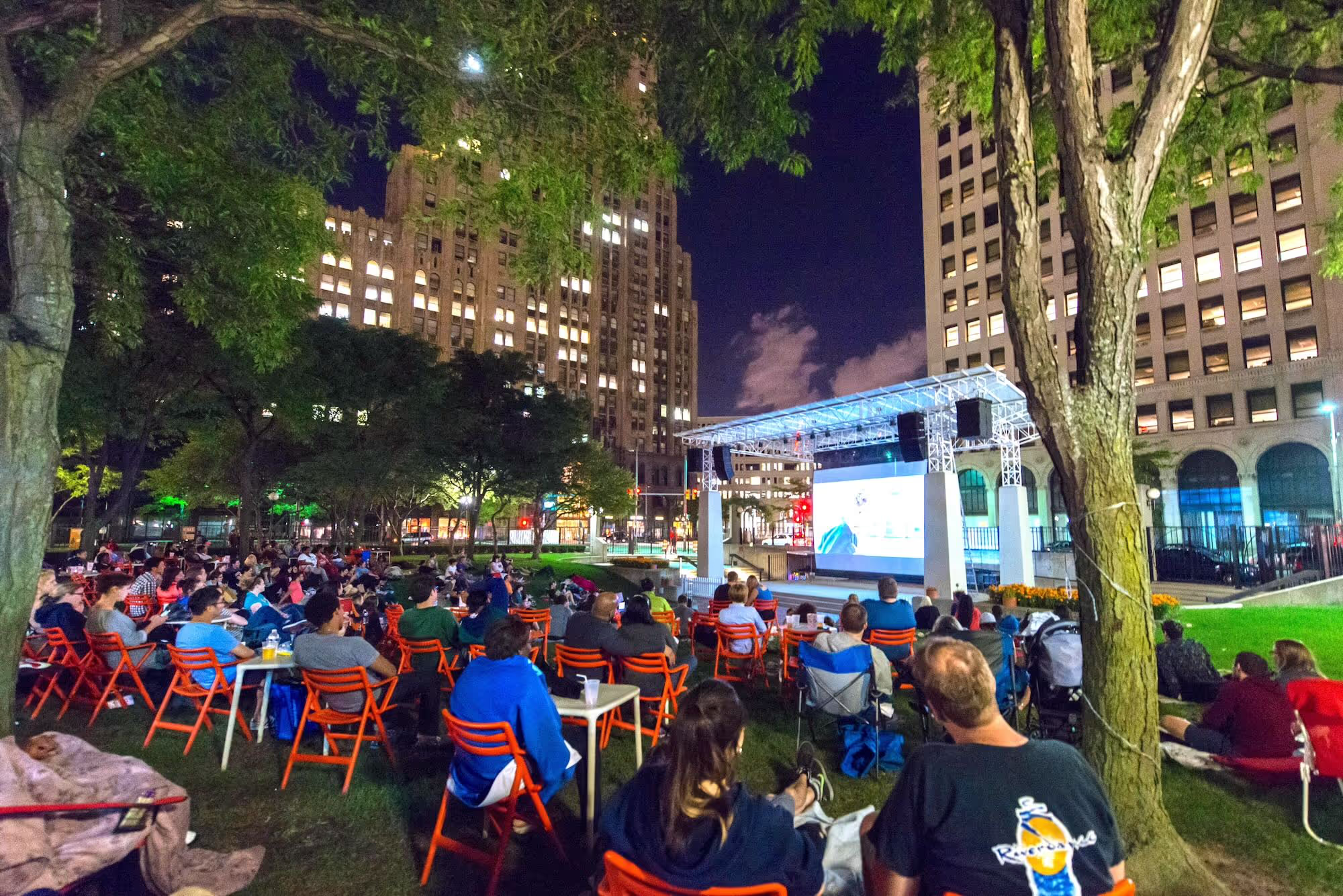
What happens when a design school and a neighborhood shape their future together? That's the question at the heart of a hands-on charette workshop hosted by Design Core and Midtown Detroit Inc., inviting Placemaking Week participants to explore the reimagined streetscapes and public spaces around the Taubman Center for Design Education at the College for Creative Studies and Detroit’s New Center neighborhood.
As steward of Detroit's UNESCO City of Design designation, Design Core champions and supports design-driven businesses through services that strengthen, grow, and attract design talent while promoting Detroit's design story locally and globally.
Once dominated by parking lots and car-centric infrastructure, New Center is transforming into a walkable, high-density destination. Here, Art Deco landmarks like the Fisher Building anchor a "city within a city" feel that bridges historic charm with contemporary creative energy. With future campus and neighborhood master plans in the works, the district’s next chapter is taking shape.
True to the spirit of placemaking, this mobile workshop will invite participants to survey exterior spaces, engage in interactive exercises, and develop actionable recommendations. Together, attendees will inspire human-centered, inclusive design strategies, consider how campus and community can better connect, and draw practical insights for activating public spaces in rapidly evolving urban districts.
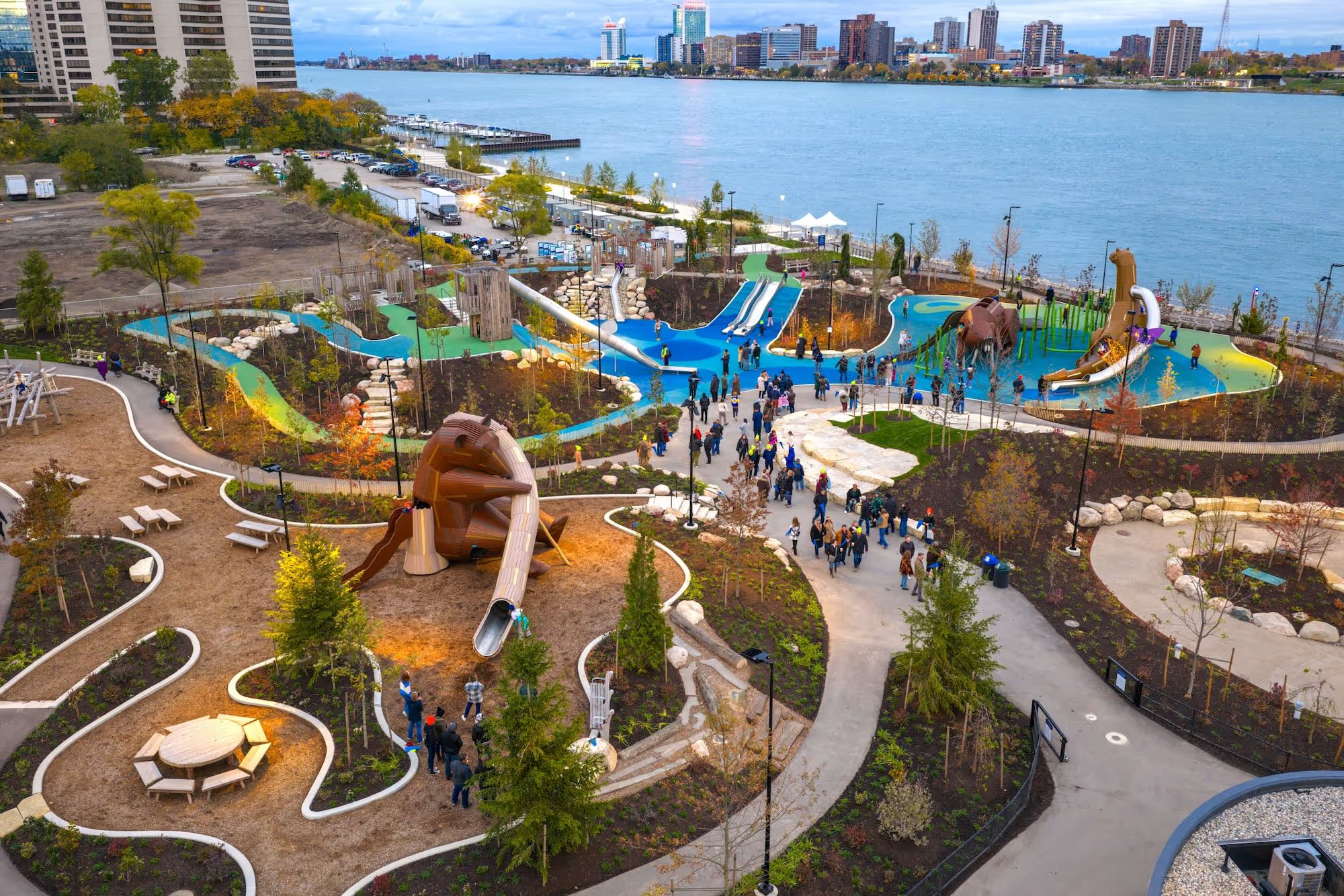
Detroit's riverfront is a testament to what large-scale revitalization can achieve—not only reclaiming miles of public space, but reversing decades of neglect to create something genuinely transformative. Heavy post-WWII industrialization had turned a once-bustling waterfront into a polluted dumping ground, but what exists today is a continuous, accessible riverfront that authentically reflects and serves its community.
Transformative public space requires more than good design—it demands sustained investment, authentic community input, and cross-sector collaboration. Attendees will have the opportunity to visit the riverfront on a mobile workshop, where the Detroit Riverfront Conservancy, the force behind the revitalization of over eight miles of trails and over 100 acres of parks and greenways—all while welcoming three million visitors and supporting 2,500 jobs each year, and investing two billion dollars through public and private funds over the last 20 years. The Conservancy will walk and talk with participants from Huntington Place to the brand new Ralph C. Wilson, Jr. Centennial Park, showcasing the many historic sites and recent investments in between.
“From Recovery to Resilience through Placemaking” isn't just a conference theme, it is what Detroit has been doing, neighborhood by neighborhood, for years and years. These workshops and spectacular venues are your invitation to see it firsthand. Learn from the people doing the work, and bring those lessons back to your own city. We hope to see you in Detroit!
Don’t Miss Out
In 2024, Placemaking Week sold out before registration closed. If you've been thinking about attending, now is the time to take the leap. Early registration closes Monday, March 30 at 11:59pm ET. Early group rates and scholarships are available.
Attendees are also eligible for AICP credits. After the conference, visit the American Planning Association website to register for AICP CM credits for the plenaries, workshops, and breakout sessions that you attended!
Thank You to Our Venue Partner

The rich text element allows you to create and format headings, paragraphs, blockquotes, images, and video all in one place instead of having to add and format them individually. Just double-click and easily create content.
The rich text element allows you to create and format headings, paragraphs, blockquotes, images, and video all in one place instead of having to add and format them individually. Just double-click and easily create content.
Body Text Body Link
The rich text element allows you to create and format headings, paragraphs, blockquotes, images, and video all in one place instead of having to add and format them individually. Just double-click and easily create content.
Here is some highlighted text from the article.

Headings, paragraphs, blockquotes, figures, images, and figure captions can all be styled after a class is added to the rich text element using the "When inside of" nested selector system.
Headings, paragraphs, blockquotes, figures, images, and figure captions can all be styled after a class is added to the rich text element using the "When inside of" nested selector system.
Headings, paragraphs, blockquotes, figures, images, and figure captions can all be styled after a class is added to the rich text element using the "When inside of" nested selector system.

We are committed to access to quality content that advances the placemaking cause—and your support makes that possible. If this article informed, inspired, or helped you, please consider making a quick donation. Every contribution helps!
Project for Public Spaces is a 501(c)(3) tax-exempt organization and your donation is tax-deductible within the guidelines of U.S. law.
.avif)