Close Menu
Menu
Dear Public Space Champion,
When our founders started Project for Public Spaces in 1975, they set out on a three-year mission to prove why public space matters. Five decades later, so much has changed for the better in our public realm. Community engagement and human-centered design are far more common, funding for creative projects in public places has increased, and a community of placemakers has grown across the world. And yet, great public spaces are still the exception, not the rule.
In 2025, we embraced our 50th anniversary year as a moment of reflection to chart the path with a new strategic plan. Today, we’re excited to share that new vision for the organization with you. But just like with placemaking, the process is as important as the product, so we also want to share a bit about what we learned along the way.
We surveyed practitioners worldwide, interviewed our peers, and strategized with our board and staff. Collectively, we set out on a journey to reaffirm the heart of what Project for Public Spaces is all about and discover what it can become over the next 50 years. Ultimately, we found ourselves returning to the same question that animated our founders: Why doesn’t every community have the public spaces it deserves?
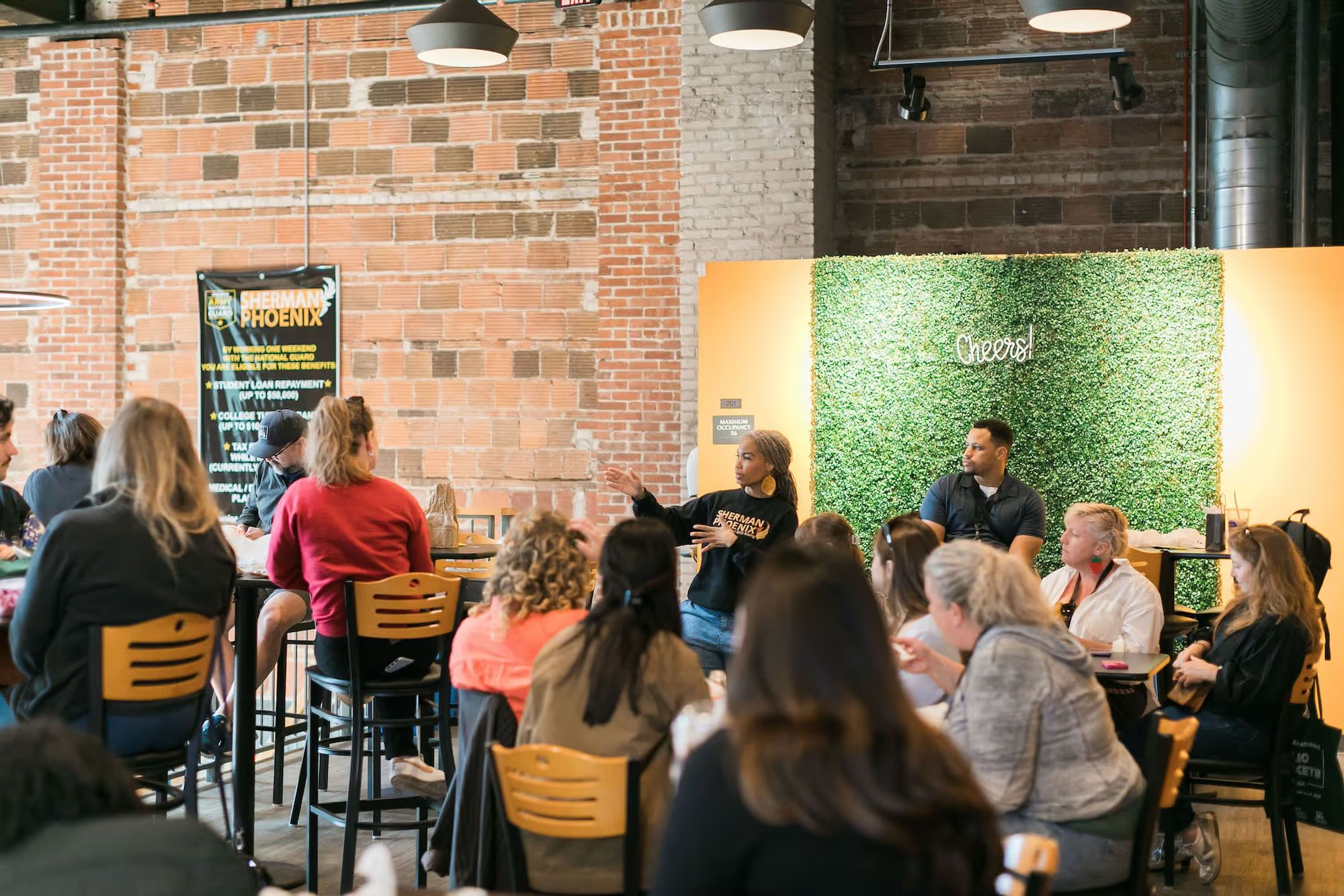
After a year of learning, one thing is for sure. We don’t need another report about why public space matters. Every new piece of research says the same thing: When public spaces are designed, programmed, and managed with participation from the full diversity of the community, they have the power to enhance our health, resilience, civic life, and local economies. And yet, when we asked over 700 public space practitioners from around the world whether the public spaces in their area were meeting community needs, only 5% said, “yes.”
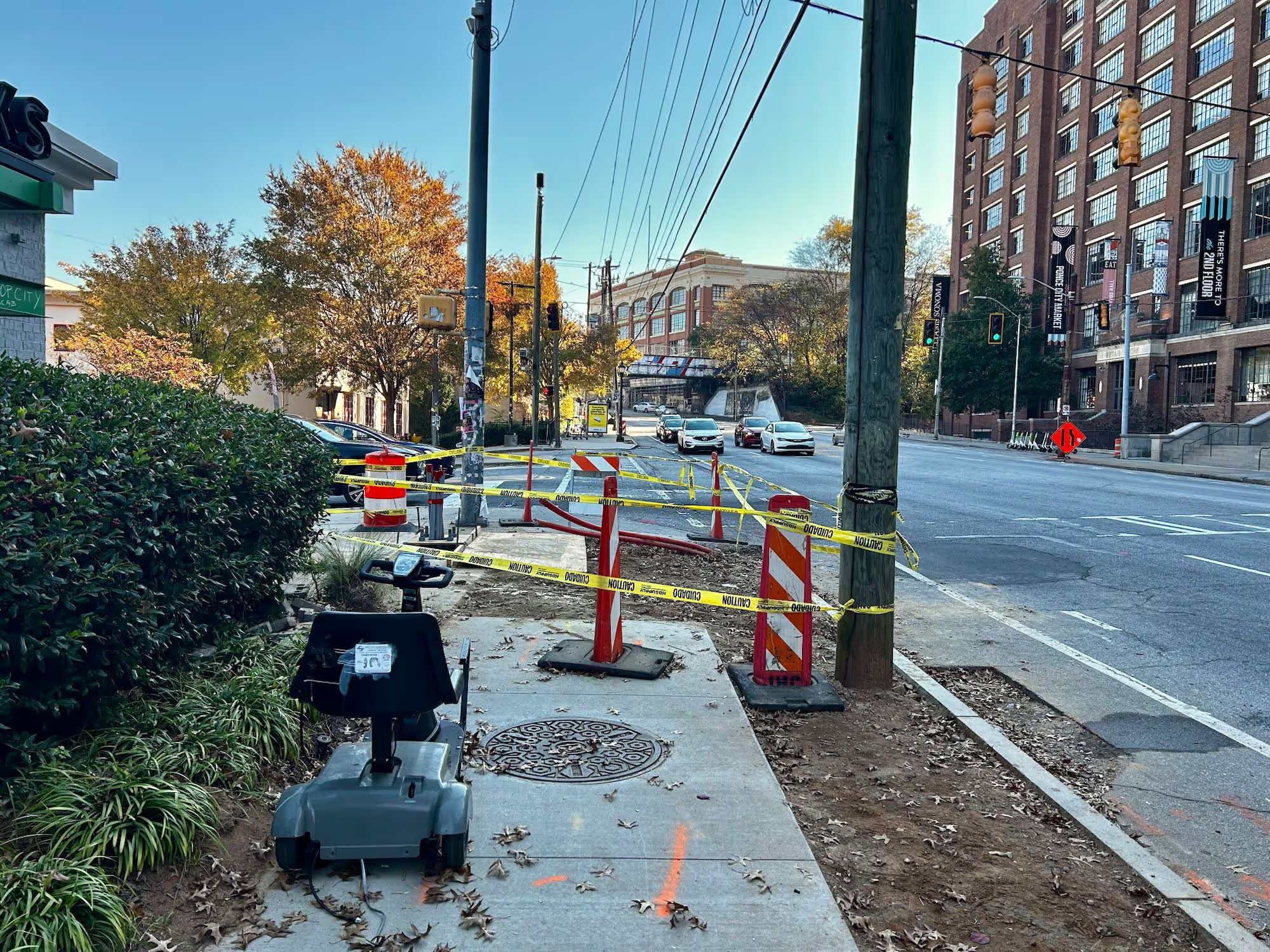
The problem isn’t a lack of evidence; it’s the persistence of broken practices and systems. When transforming or caring for a public place, there are so many barriers to overcome: racial prejudice, narrow professional training, outdated regulations, misaligned funding streams, and a lack of political will. Marginalized communities are hardest hit by this mess of broken systems because of years of public disinvestment and because residents often have less time to navigate the bureaucracies that shape their places or to remake those places themselves.
So if we want to unlock the full potential of our public spaces, how do we overcome that inertia?
What we learned through this process is that it’s the people behind the public space who are the levers of change. As the mentor to our founders William H. Whyte once put it, “Good places tend to be all of a piece—and the reason can almost always be traced to a human being.”

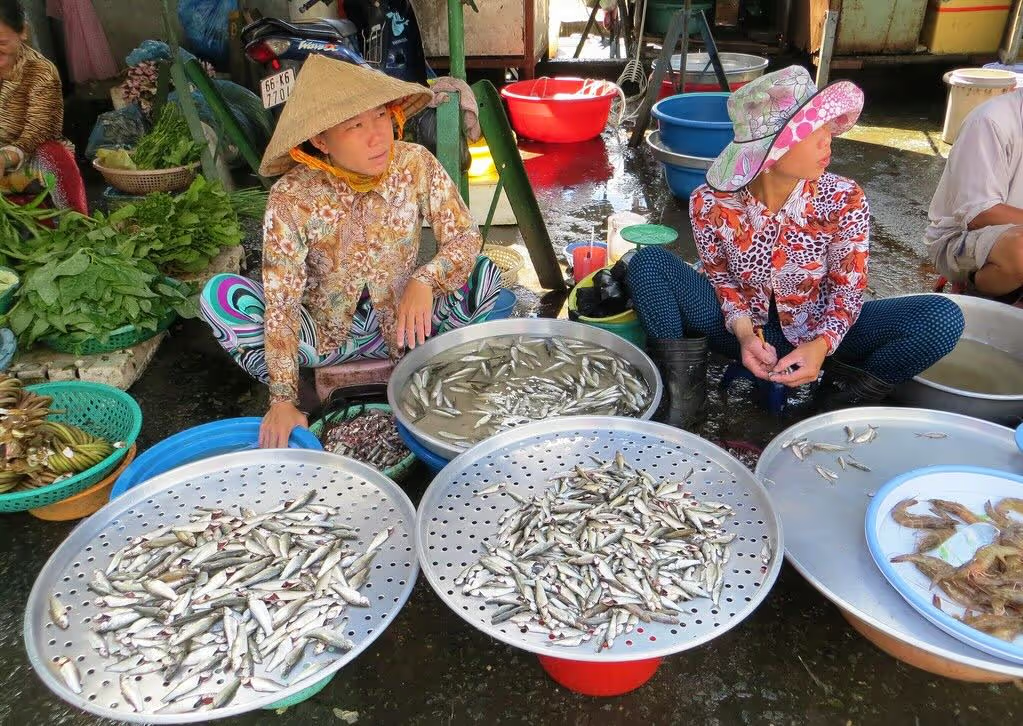
Over the course of our fifty-year history, we’ve seen this proven true again and again. We’ve encountered countless passionate individuals who have rallied their communities and organizations to transform a public space, a neighborhood, or an entire city for the better. They listen, question, persuade, invite more people in, and sometimes just do things themselves. These reformers, rebels, entrepreneurs, “intrapreneurs,” unconventional leaders, and revolutionaries—these placemakers—make the difference between a public realm that barely even keeps people safe and one that allows their well-being to flourish.
We need these dedicated people because outstanding public spaces require trial, error, and long-term care. Placemakers work with a community to grow and cultivate a public space like a garden, and in the process, they navigate, challenge, or even repair the broken systems that fail our public spaces every day.
As a backbone organization for public space champions of all stripes, Project for Public Spaces’ role is to support these passionate individuals as they create outstanding gathering places in their own communities and around the world.
Our work will always be rooted in on-the-ground practice, transforming real public spaces hand in hand with placemakers and their communities. However, as this field has grown, so have we. We are excited to share with you our vision for how we plan to strengthen public spaces and the field of practitioners who care for them over the next three years.

1. Build the Field
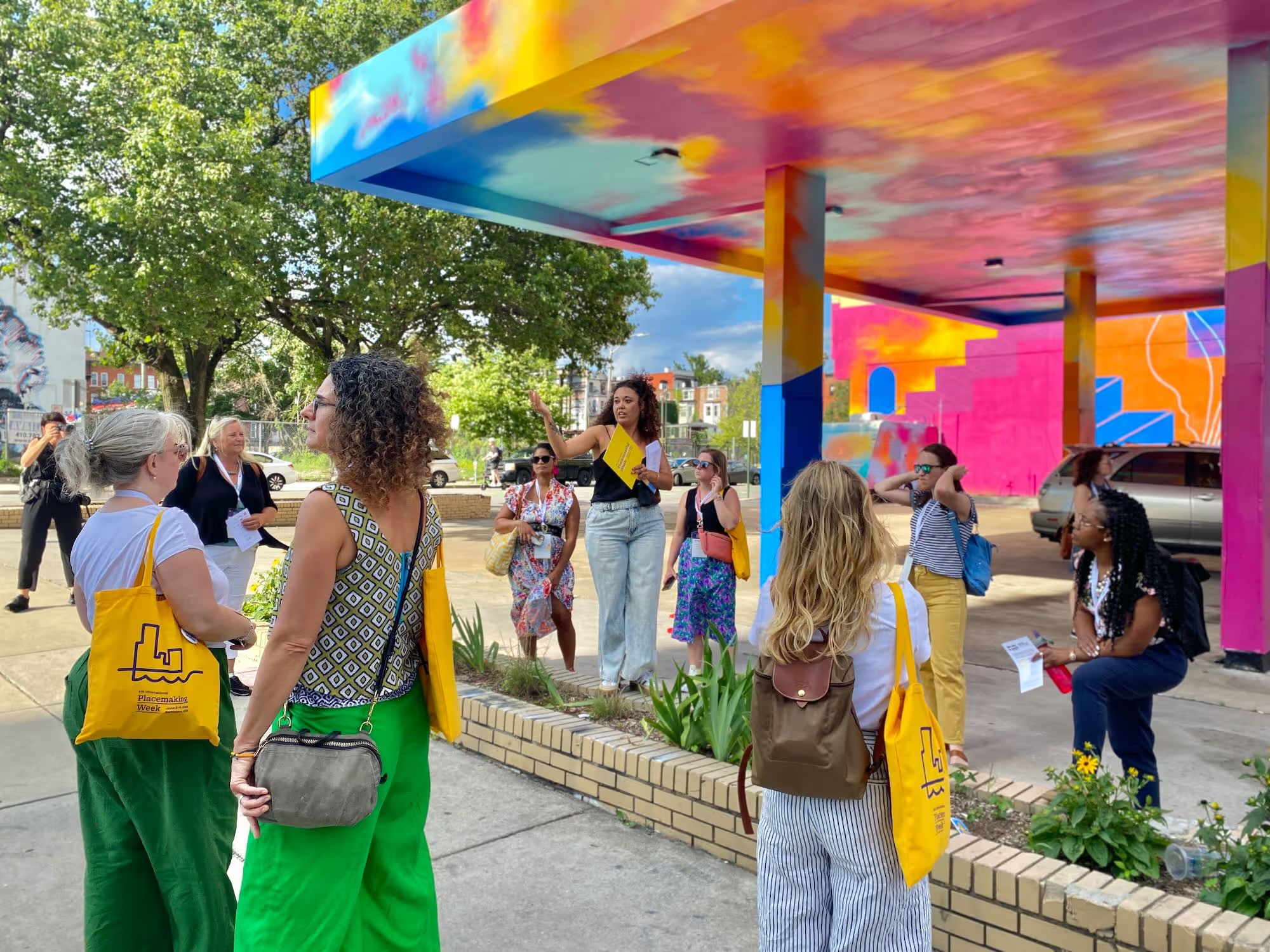
For over fifty years, Project for Public Spaces has helped people around the world develop their skills and find community around the practice of placemaking. Many encounter PPS early in their careers through coursework or online research, and our articles, events, and affordable learning options will continue to serve as a “front door” for the field. Going forward, we will deepen this role by creating new opportunities for practitioners at all levels—from welcoming more newcomers through additional scholarships to offering advanced programming for seasoned leaders.
2. Drive Innovation
Project for Public Spaces has a long track record of introducing ideas that shift how the field thinks about public space, leading to more human-centered design and more meaningful community engagement. We will continue that tradition by incubating initiatives that unlock the potential of underused spaces, spotlighting promising ideas from across the field, and translating real-world insights into compelling concepts that inspire how people see, design, and manage public spaces.

3. Increase Investment
Funding is the top challenge public space practitioners face, according to our 2025 State of Public Space survey. Our deep history of partnering with philanthropic organizations across the United States puts us in a strong position to help address this gap. In the coming years, we will respond by expanding our Community Placemaking Grants, convening grantmakers through our Placemaking Funders Forum, and equipping advocates with the tools to make a compelling case for investing in public space.
.avif)
4. Grow Our Capacity
None of this is possible without a strong organizational foundation. That means attracting and retaining a skilled, diverse team of planners, designers, educators, communicators, and nonprofit professionals, while investing in the systems and processes that help them do their best work. We'll also pursue greater efficiency in how we deliver programs, ensuring that every resource we secure translates into real impact for public spaces and the communities that depend on them.
Advancing this strategy would not be possible without our partners and the many practitioners who are doing this work on the ground across the world. As someone who cares about public space, we invite you to read our strategic plan overview to learn more and get involved.
We feel confident that through this strategic plan, Project for Public Spaces can continue to be as impactful in the next three years as it has ever been. However, we also know that creating a world of community-powered public spaces is generational work.
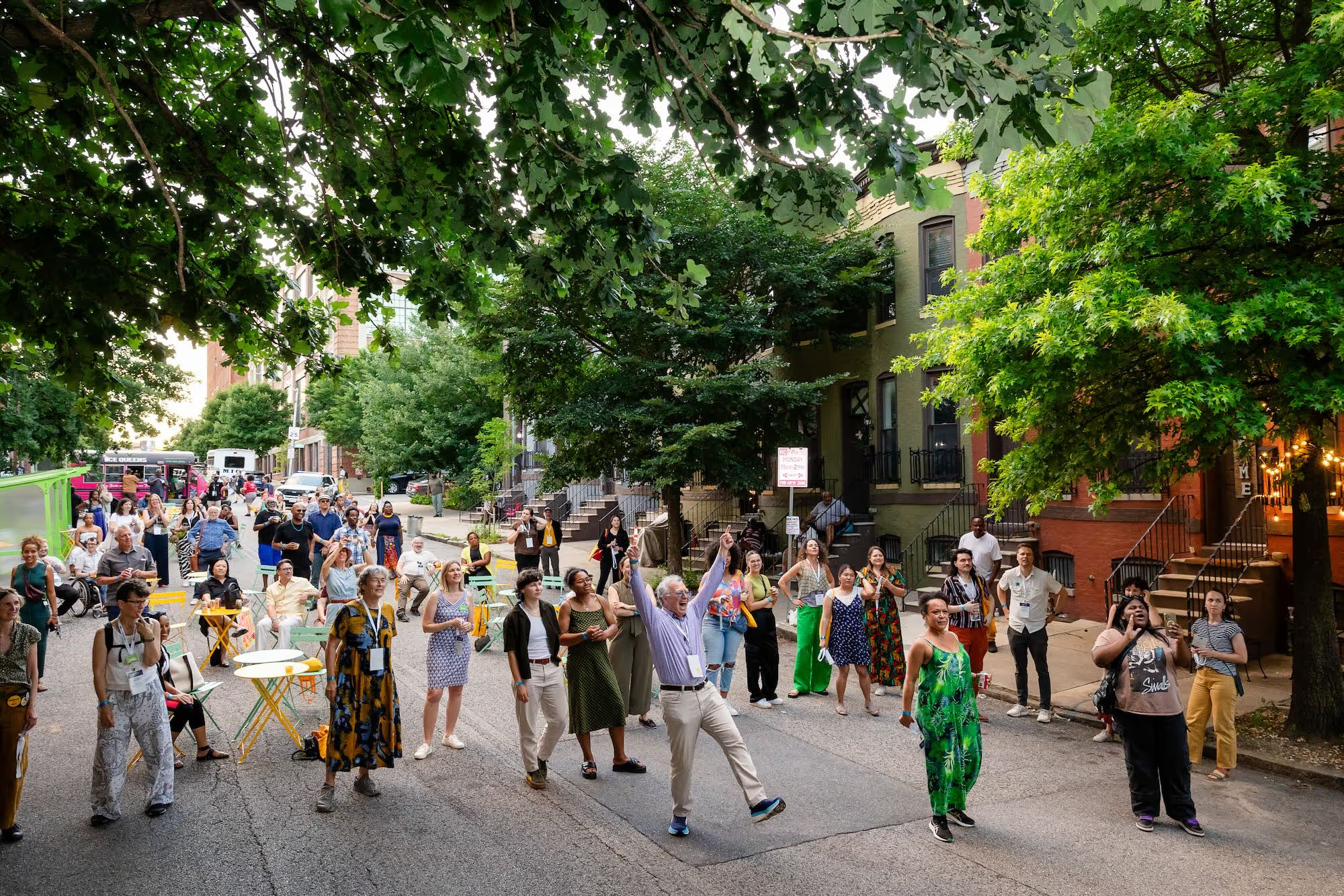
The public realm we need will not be created through one big flood of infrastructure funding, but through what PPS board member and former New York City Parks Commissioner Mitchell Silver calls a “culture of care.” This requires building—and sustaining—a strong community of practice, including our wise elders and our young challengers alike. It also requires real investment in the ongoing maintenance, adjustments, and programming of our public spaces, which is always at risk of evaporating every time an administration or decision-making role changes hands.
To that end, we find ourselves remembering one of the most important principles of placemaking: “You’re never finished.” We will be here with you, convening, inventing, advocating, and caring for a better public realm for years to come.
In community and in place,
Nate Storring & Kelly Verel
Co-Executive Directors
Project for Public Spaces
The rich text element allows you to create and format headings, paragraphs, blockquotes, images, and video all in one place instead of having to add and format them individually. Just double-click and easily create content.
The rich text element allows you to create and format headings, paragraphs, blockquotes, images, and video all in one place instead of having to add and format them individually. Just double-click and easily create content.
Body Text Body Link
The rich text element allows you to create and format headings, paragraphs, blockquotes, images, and video all in one place instead of having to add and format them individually. Just double-click and easily create content.
Here is some highlighted text from the article.

Headings, paragraphs, blockquotes, figures, images, and figure captions can all be styled after a class is added to the rich text element using the "When inside of" nested selector system.
Headings, paragraphs, blockquotes, figures, images, and figure captions can all be styled after a class is added to the rich text element using the "When inside of" nested selector system.
Headings, paragraphs, blockquotes, figures, images, and figure captions can all be styled after a class is added to the rich text element using the "When inside of" nested selector system.
We are committed to access to quality content that advances the placemaking cause—and your support makes that possible. If this article informed, inspired, or helped you, please consider making a quick donation. Every contribution helps!
Project for Public Spaces is a 501(c)(3) tax-exempt organization and your donation is tax-deductible within the guidelines of U.S. law.

.avif)