The Placemaking Round-Up
A biweekly newsletter with public space news, resources, and opportunities.
The Biweekly Bazaar
A curated dispatch on all things public markets plus the latest announcements from the Market Cities Program.
A biweekly newsletter with public space news, resources, and opportunities.
A curated dispatch on all things public markets plus the latest announcements from the Market Cities Program.

A waterfront is often the face of a city. However, from old mill towns to former shipping ports, many urban waterfronts no longer connect to the world through their former transportation and economic functions. Without this bustle, cities are increasingly left exposed, challenged to reveal their personality and values in these unused spaces. Increasingly, waterfronts are where cities are forced to stop their treadmill of economic activity, development and transportation infrastructure, and figure out who they are.
Discovering an identity for a waterfront has not been easy for many cities. In fact, it is here where the debate over the soul of cities is perhaps most magnified. The void left on many urban waterfronts attracts the full array of claims on what a city is about and what it most needs. Some waterfronts are being privatized with one dimensional commercial activity, others with housing. Some are being limited to passive use or structured recreation, and many have been reserved for automobiles. Each of these forces is vying for these underperforming spaces, and each time one particular use is allowed to dominate it degrades a waterfront's long-term potential. Waterfronts need to not only draw on a dynamic combination of activity to succeed, they must also become greater than the sum of their uses.
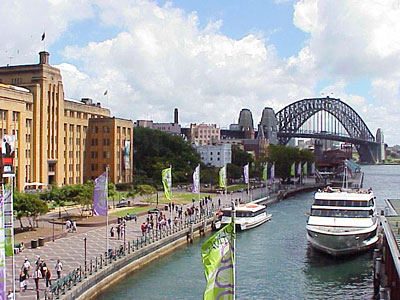
Circular Quay In many ways, Circular Quay is the "heart of Sydney," and its success is due to the essential role it plays in the city's daily life. Sydney Austrailia

Coney Island Coney Island's streets, buildings, public beach and boardwalk may be a bit down at the heels, but it remains a one-of-a-kind destination. New York, NY USA

Granville Island Salvaged from the husks of old factories and infused with a spirit all its own, the district offers up a wonderfully imaginative stew of markets, play areas, cultural activities, and stunning waterfronts. Vancouver, BC Canada

Harborpark Redeveloped industrial space on the Kenosha Harbor now housing a park and open space, a public museum, residential housing, and a marina. Kenosha, WI USA

Lakefront Path An 18-1/2-mile multi-use linear park along the shores of Lake Michigan. Chicago, IL USA

Little Turtle Waterway A downtown riverbank park that links into a planned trail system and provides direct access to the water. Logansport, IN USA

Main Beach Park and Heisler Park Laguna Beach's two-acre waterfront park is linked to Heisler Park, a two-mile greenway that runs along the bluffs of the coastline. Laguna Beach, CA USA

Kungstradgarden The 918-acre "King's Garden" is variously described as a park, town square, amusement park, and botanical garden. Stockholm Sweden

Pier 39 A festival marketplace on the bay. San Francisco, CA USA
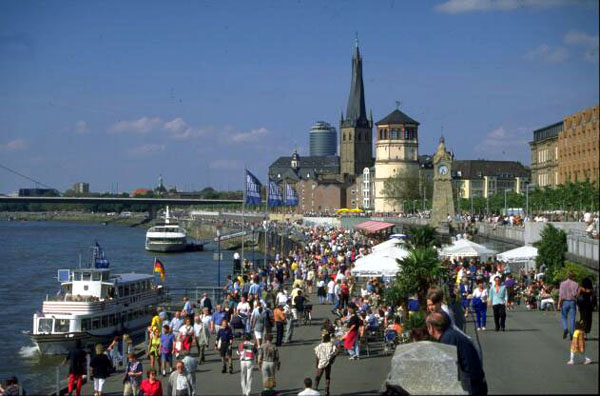
River Rhine Promenade A very successful waterfront transformation that was completed on a tight budget. Duesseldorf GER

Riverwalk & Waterplace Park Once entirely covered by the "world's widest bridge," the Providence River downtown is now enlivened by year-round public art and cultural events. Providence, RI USA

Venice Beach Venice Beach is famous for its street artists, vendors, musicians, body builders, palm readers, and roller skaters. Venice, CA USA
The rich text element allows you to create and format headings, paragraphs, blockquotes, images, and video all in one place instead of having to add and format them individually. Just double-click and easily create content.
The rich text element allows you to create and format headings, paragraphs, blockquotes, images, and video all in one place instead of having to add and format them individually. Just double-click and easily create content.
Body Text Body Link
The rich text element allows you to create and format headings, paragraphs, blockquotes, images, and video all in one place instead of having to add and format them individually. Just double-click and easily create content.
Here is some highlighted text from the article.

Headings, paragraphs, blockquotes, figures, images, and figure captions can all be styled after a class is added to the rich text element using the "When inside of" nested selector system.
Headings, paragraphs, blockquotes, figures, images, and figure captions can all be styled after a class is added to the rich text element using the "When inside of" nested selector system.
Headings, paragraphs, blockquotes, figures, images, and figure captions can all be styled after a class is added to the rich text element using the "When inside of" nested selector system.

We are committed to access to quality content that advances the placemaking cause—and your support makes that possible. If this article informed, inspired, or helped you, please consider making a quick donation. Every contribution helps!
Project for Public Spaces is a 501(c)(3) tax-exempt organization and your donation is tax-deductible within the guidelines of U.S. law.
.avif)