In 2005, PPS co-founded The New York City Streets Renaissance campaign, a grassroots initiative that has catalyzed the transformation of the city’s transportation policy and brought sweeping change to NYC streets in a few short years.

Framing the Campaign

PPS was brought in by social entrepreneur Mark Gorton to work with his technology-focused non-profit, The Open Planning Project (TOPP), and the advocacy group Transportation Alternatives (TA), to develop a new campaign model for transportation reform. The campaign was framed to build on TA’s effective pedestrian and bicycle advocacy in order to create a movement that facilitates, informs and inspires a broad network of partners towards a bold vision for reinventing NYC’s streets as vibrant public places.

Launching the Campaign

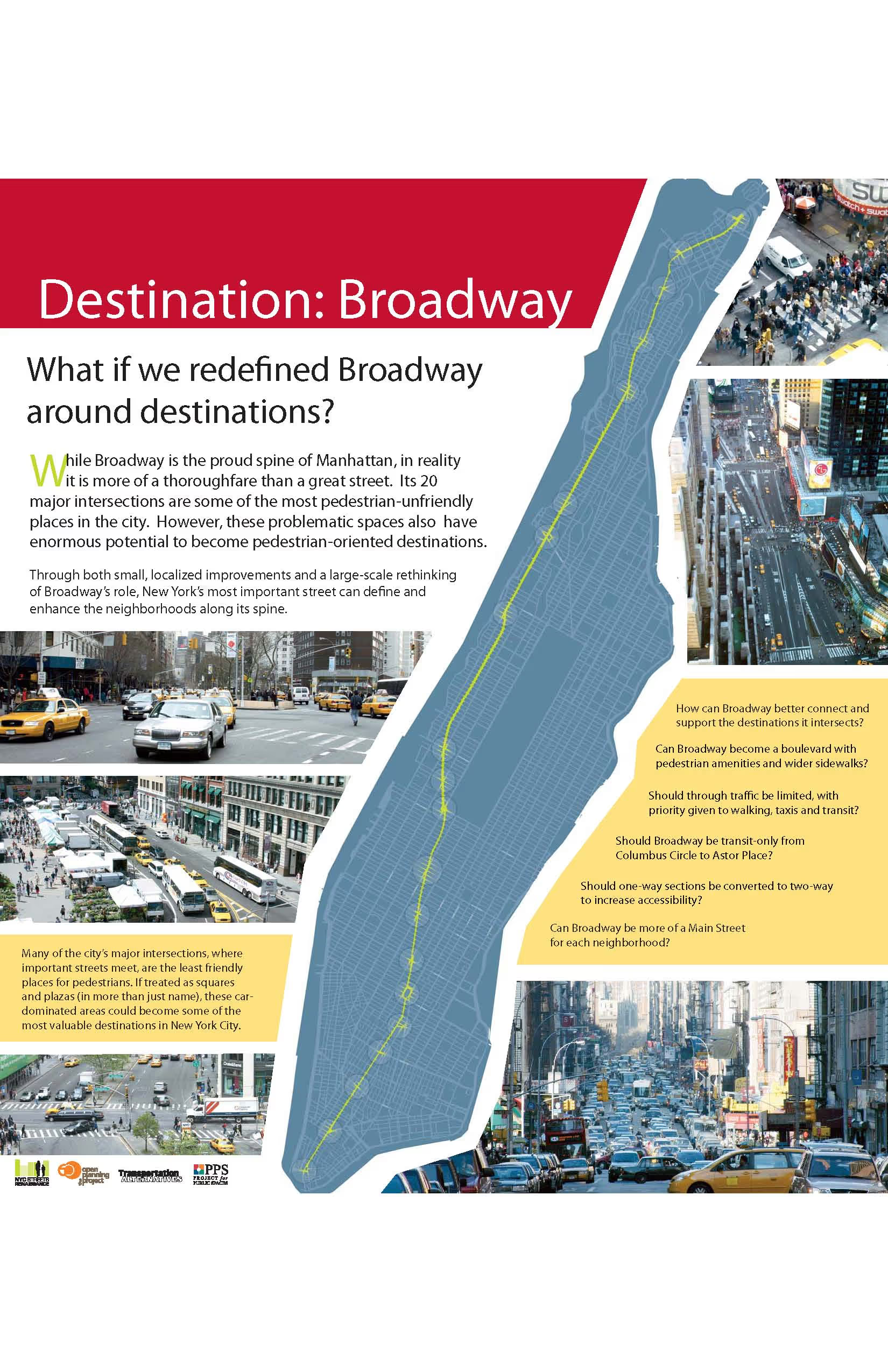
Exhibit board for the rethinking of Broadway we led in 2006.

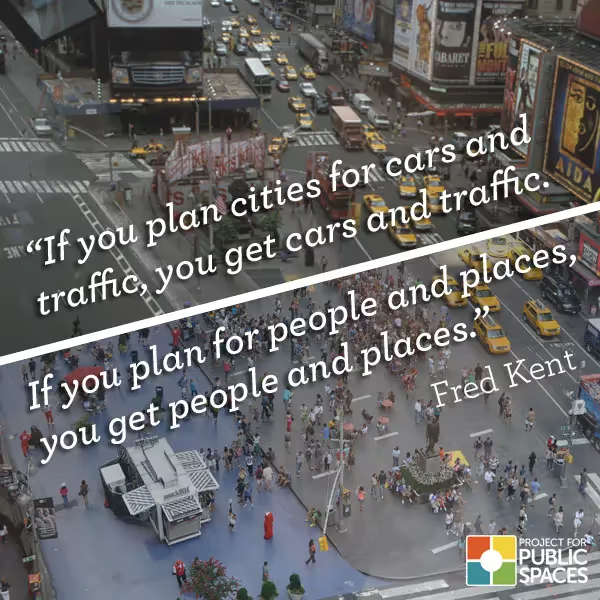
The campaign launched in January 2006 at the Municipal Art Society (MAS) with an exhibit, Livable Streets: A New Vision for New York, designed and directed by PPS. The exhibit covered the problems, myths, and potential of NYC traffic dominated streets, showing how cities around the world are addressing similar issues. Photo simulations demonstrated the potential of transforming NYC streets. The process, methodology and results of a PPS-led community visioning process around the public spaces in the Meatpacking District were presented as well. Over 3,000 people visited the exhibit at MAS, and many more viewed subsequent showings in the gallery space of the Conde Nast building in Times Square and the Brooklyn Public Library. We also organized a forum with leaders from Broadway who would soon implement the radical transformations discussed.

Pilot Projects

The exhibit and the emerging campaign had an immediate impact. The head of the DUMBO Business Improvement District (BID) in Brooklyn was inspired by the vision for the Meatpacking District — which has now also been implemented — to transform excess street space into a public plaza. This space became the first plaza in the New York City Department of Transportation’s Public Plaza Program, part of the Mayor’s PlaNYC initiative, in which the Mayor committed DOT to carving out public plazas from street space in each of the city’s 59 community districts.

Building on the exhibit, in 2006 and 2007, PPS lead extensive Placemaking processes with a series of innovative BIDs and local communities to develop Streets Renaissance demonstration projects in many of the city’s most innovative, yet traffic dominated, neighborhoods, including Times Square, Union Square, 9th Avenue in Hells Kitchenthe Meatpacking District, Columbus Avenue, Petrosino Square, Allen Street and Grand Army Plaza, Myrtle Avenue, and North Flatbush Avenue in Brooklyn. All ten of the these community-led plans are in various stages of implementation along the lines of what we helped the community articulate.

Advocacy

The campaign launched Streetsblog and Streetfilms in mid 2006 to cover transportation issues in NYC, document successes, and tap the power of the engaged blog readers as a coordinated advocacy voice. Helping to seed the early discussion, PPS introduced ideas and stories from our experiences in other cities such as Bogotá, Melbourne, Hong Kong, Indianapolis, Paris, Havana and Dubai. PPS continues to partner with Streetsblog and Streetfilms and the burgeoning online Livable Streets Network.

Impact

The campaign radically raised the profile of progressive transportation and public space issues and generated demand to bring in a new progressive administration to DOT, and most notably, a new commissioner in 2007. The most direct accomplishment for PPS was to have Andy Wiley-Schwartz, a 10 year PPS veteran and director of our transportation program, hired as Assistant Commissioner of NYC DOT and put in charge of implementing the department’s public spaces initiatives and several of PPS’ demonstration projects. Five other former PPS staff and close colleagues trained in our approach to Placemaking were also hired by NYC DOT.

Results have also started to show on the ground. In 2008 alone, New York City took 49 acres of road space, traffic lanes and parking spots away from cars and gave it back to communities for bike lanes, pedestrian areas and public plazas.

Madison Square was just one location where DOT reallocated space for bikes and pedestrians

Expanding the Impact to Lower Income Communities

To bring the efforts of the campaign to lower income neighborhoods, PPS partnered with the City’s Department of Health and Mental Hygiene as part of a team of organizations who received a Food and Fitness grant from the W.K. Kellogg Foundation. Under this program, PPS is providing training and conducting community workshops in neighborhoods with the highest health disparities in the city, including the South Bronx, central Brooklyn and East Harlem.

PPS has also recently collaborated with Columbia University in a study of 40 commercial streets in poor and non-poor neighborhoods to understand how streetscape features may promote or discourage physical activity among city residents. PPS also led planning efforts for public plaza improvements in areas around the Bronx River Arts Center, Bushwick’s Moore Street Market and Bedford-Stuyvesant’s Utica Avenue stop.

Spreading the Model to Other Cities

We also worked to set up and support similar Placemaking campaigns in other cities, leading to similar outcomes, in Chicago, San Francisco, Los Angeles, San AntonioSeattle and Philadelphia.