Close Menu
Menu
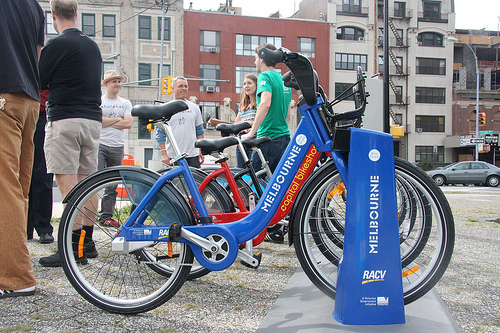
With yesterday's big announcement from the NYC DOT, bike shares are in the news again. Here in New York, we're getting excited about the possibilities on the horizon as hundreds of bike share stations start popping up all over town. These stations don't just improve mobility and transportation options--they're also wonderful tools for activating public spaces. In fact, bike share stations are ideal for engendering what we call Triangulation, which Holly Whyte explained as "the process by which some external stimulus provides a linkage between people and prompts strangers to talk to other strangers as if they knew each other."
Here are three reasons that bike share stations are ideal triangulators:
The rich text element allows you to create and format headings, paragraphs, blockquotes, images, and video all in one place instead of having to add and format them individually. Just double-click and easily create content.
The rich text element allows you to create and format headings, paragraphs, blockquotes, images, and video all in one place instead of having to add and format them individually. Just double-click and easily create content.
Body Text Body Link
The rich text element allows you to create and format headings, paragraphs, blockquotes, images, and video all in one place instead of having to add and format them individually. Just double-click and easily create content.
Here is some highlighted text from the article.

Headings, paragraphs, blockquotes, figures, images, and figure captions can all be styled after a class is added to the rich text element using the "When inside of" nested selector system.
Headings, paragraphs, blockquotes, figures, images, and figure captions can all be styled after a class is added to the rich text element using the "When inside of" nested selector system.
Headings, paragraphs, blockquotes, figures, images, and figure captions can all be styled after a class is added to the rich text element using the "When inside of" nested selector system.

We are committed to access to quality content that advances the placemaking cause—and your support makes that possible. If this article informed, inspired, or helped you, please consider making a quick donation. Every contribution helps!
Project for Public Spaces is a 501(c)(3) tax-exempt organization and your donation is tax-deductible within the guidelines of U.S. law.

.avif)