Close Menu
Menu
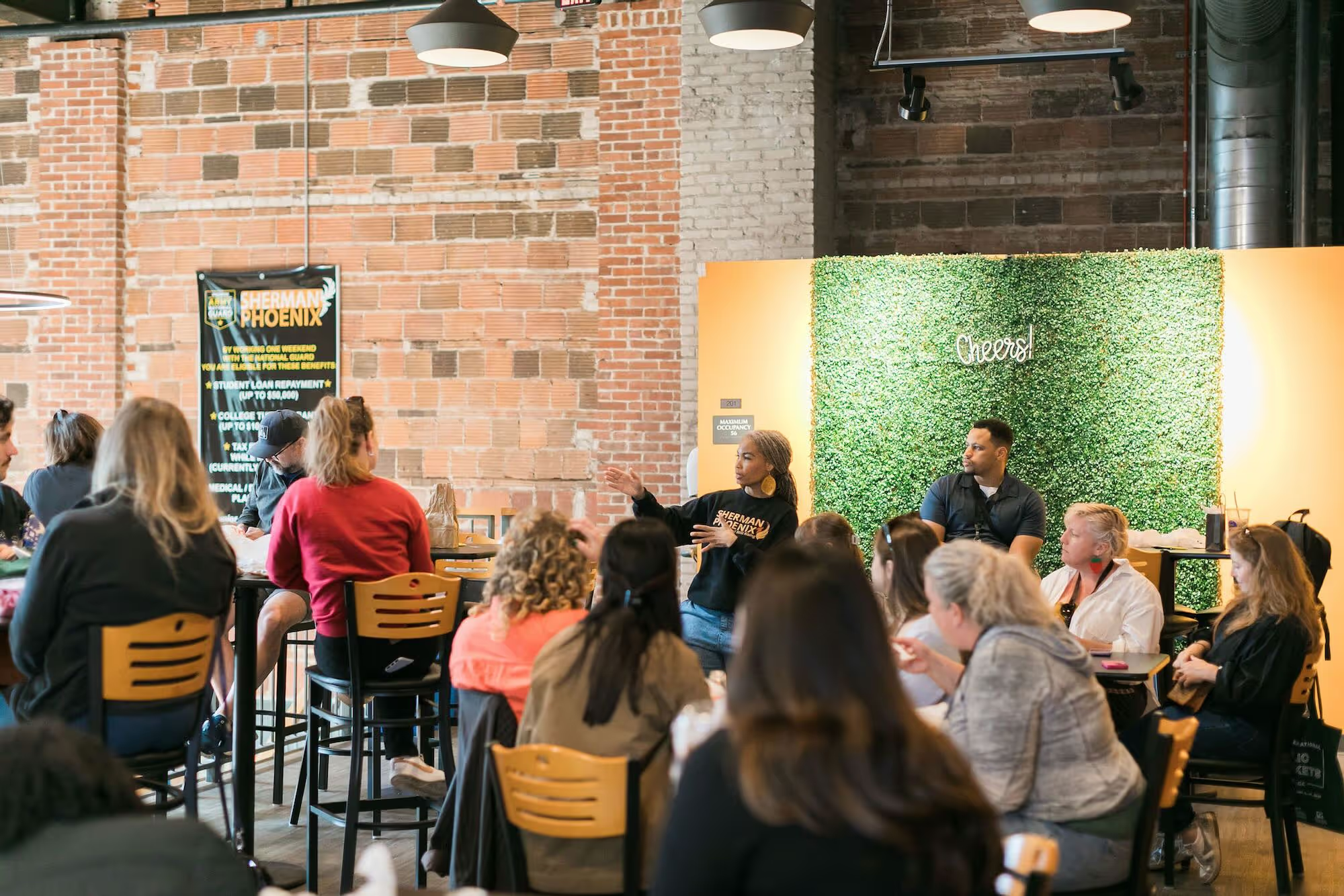
Planners, developers and city officials from Krakow to Kansas converged on Granville Island in Vancouver for Project for Public Spaces’ two-day Forum on Creating Great Public Multi-Use Destinations. As a vibrant place, Granville Island was the ideal setting for 45 participants to learn about the local community, discuss creative financing solutions, and perhaps most importantly, hear from each other about innovative solutions.

Presenters spoke on issues like “Placemaking as a Tool to Develop Multi-Use Destinations,” "How to make Community Places Happening Places," “The Experience Economy,” and “How Temporary Markets can be Places for Creative Uses,” among other topics.

As everyone who visits quickly learns, Granville Island is much more than just an island. One of the top two destinations in Canada, it is also a unique example of one of the best “multi-use destinations” in the world. This kind of destination defines a city’s identity through the variety of uses and public spaces that highlight local assets and unique talents and skills of the community -educational, cultural, and commercial- that are all open and available to all visitors to enjoy for free. They allow you to visit, become involved and stay awhile. These destinations are not defined by architecture or design elements, but rather the uses these features support.
Now 30 years old, Granville Island has not only retained the marine-related uses that defined its history, but also embraced the existing concrete plant and added such diverse uses as a public market (its economic anchor), a variety of community related activities and services, performance spaces and museums, a hotel, a college of art and design, a brewery, 200 artist studios and a variety of other retail and service oriented amenities. Growing incrementally over the years, Granville is publicly owned and managed and has proved that successful development need not be expensive. The Candian Management and Housing Corporation, a federal department which manages the island, updated many of the original corrugated metal buildings that were on the site and continues to maintain a mix of uses that make it socially, economically and environmentally sustainable.
There were a variety of interesting lessons that emerged from the forum:
-Public multi-use destinations like Granville Island have proven to be most successful, and we should replicate them more often. Why do we spend so much money on new developments that don’t work and that don’t attract people?
-Don’t lead with design. The design of multi-use destinations should be to create a “setting” for the uses that are occurring and that emphasize the products and the authentic aspects of the place.
-The importance of government learning to say “yes” to new ideas and developing stronger more trusting relationships with the private sector.
-“If you think you’re done, you’re finished” – Develop spaces that are flexible and that “manage themselves.” Ongoing and innovative management are key to creating vibrant multi-use destinations.
-“The magic is in the mix.” We are moving beyond the simple concept of “mixed use” toward a technique of development that builds authentic places through establishing settings and uses that are intimately related, interconnected and interdependent. True sustainability comes from the relationships between uses, tenants, and the organizations within a place.
-Find creative funding strategies to keep rents low, attract a range of tenants and incentivize the presence of tenants who may not produce a lot of money for the site, but who bring a lot of foot traffic and are invested in the area.
We want to hear from you. Do you know of any great multi-use destinations in your community or elsewhere?
The rich text element allows you to create and format headings, paragraphs, blockquotes, images, and video all in one place instead of having to add and format them individually. Just double-click and easily create content.
The rich text element allows you to create and format headings, paragraphs, blockquotes, images, and video all in one place instead of having to add and format them individually. Just double-click and easily create content.
Body Text Body Link
The rich text element allows you to create and format headings, paragraphs, blockquotes, images, and video all in one place instead of having to add and format them individually. Just double-click and easily create content.
Here is some highlighted text from the article.

Headings, paragraphs, blockquotes, figures, images, and figure captions can all be styled after a class is added to the rich text element using the "When inside of" nested selector system.
Headings, paragraphs, blockquotes, figures, images, and figure captions can all be styled after a class is added to the rich text element using the "When inside of" nested selector system.
Headings, paragraphs, blockquotes, figures, images, and figure captions can all be styled after a class is added to the rich text element using the "When inside of" nested selector system.

We are committed to access to quality content that advances the placemaking cause—and your support makes that possible. If this article informed, inspired, or helped you, please consider making a quick donation. Every contribution helps!
Project for Public Spaces is a 501(c)(3) tax-exempt organization and your donation is tax-deductible within the guidelines of U.S. law.

.avif)