Close Menu
Menu
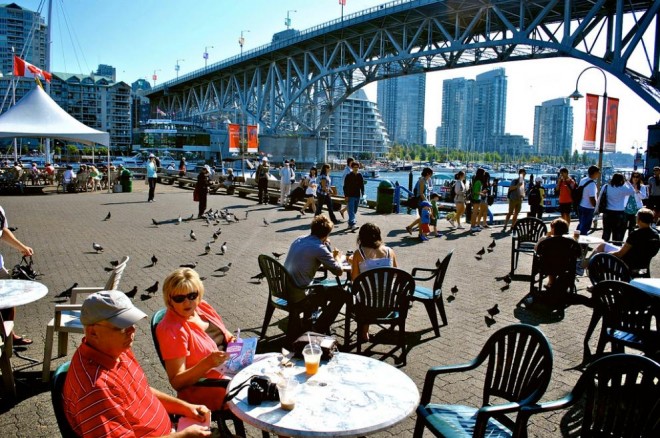
Last week, Fast Company posted a list, adapted from the book Smart Customers, Stupid Companies, of 7 Ways to Disrupt Your Industry. Reading through the list, we were struck by how applicable the recommendations that the authors put forth are to our own principles for good Placemaking. But it makes sense, when you think about it: by directly involving communities in shaping their public spaces--leading with people, not design--Placemaking is in fact a highly disruptive approach.
Placemaking tosses out the idea that an architect or planner is more of an expert about how a place should be used than the people who are going to use it. By bringing people together around a shared physical place, it's also a powerful tool for disrupting local complacency. Great public spaces give people a tangible way to connect with their neighborhoods, building a stronger local constituency--aka sense of community--over the long term.
With that in mind, we've taken Fast Company's list and tweaked it slightly to create a roster of 7 Ways to Disrupt Your Public Space for anyone who's looking to use a local spot to build social capital in their neighborhood. Without further ado:
1) Identify and eliminate your place's persistent visitor pain points. If there's a place in your neighborhood that seems forlorn or forgotten, there are probably just a few key things about it that don't work for the people who live nearby. In the words of Yogi Berra, you can see a lot just by observing--so watch how people use the space when are there, and try to figure out what the most glaring impediments are: maybe it's an unnecessarily obtrusive fence, or a lack of shade. There are plenty of reasons for people to stay home (TV, video games, the internet, et al), so public spaces have to be fun and easily accessible to be successful at drawing them out. Find your space's 'pain points,' and wipe them out first.
2) Dramatically reduce complexity When a public space is over-programmed, people can feel it, and it tells them to look elsewhere when they just want to find a place to relax. Good management is critical to the success of a public space, and that means striking the right balance between programmed activities and open, flexible space. Modern life is hyper-scheduled--communities need places for people to come together and experience the unique pleasures of just sharing some space with their neighbors.
3) Cut costs 90 percent or more: think Lighter, Quicker, Cheaper. You don't need to make major capital improvements to a place to make it feel radically different when it's already underused. In fact, Lighter, Quicker, Cheaper improvements are often much more productive when you're starting out. It's easier to get people using a space by hosting play days, planting petunias, and setting out movable folding chairs and tables than it is to raise funds for a new design. Ask yourself: "How might this community want to use this space, and what's the most efficient, immediate way to make that possible?" LQC allows you to try many different things before sinking big money into permanent improvements.
4) Make stupid places smart. The same digital toys that keep people on couches when a space isn't functioning well enough to offer a compelling alternative can also be used to get them plugged into their public spaces now. Using Digital Placemaking tools is a great way to reach people on their smartphones and computers (where they are) and engage them in a discussion of how they want to use a nearby public space. Once they see LQC changes happening that reflect their input, they'll be much more invested in the long-term process of turning a forgotten space into a great gathering place.
5) Teach your stakeholders to talk. Silo-busting is critical to the success of public spaces. To create places that are responsive to the needs of people, you need to make sure that people are communicating with each other. When mapping out your revitalization strategy, consider every local organization and business as a potential partner. See if they're willing to help you generate ideas for your space by reaching out to their customers. No one organization or individual can create a strong sense of place for a neighborhood; either people work together do what’s best for the community, or you lose any sense of civic life.
6) Be utterly inclusive. Fast Company recommends utter transparency, but when it comes to public spaces, it's probably better to think of this pointer in terms of inclusiveness. People need to be directly involved with changes being made to their public spaces, so if you are leading a local charge to revamp a space, it's crucial that you remember that the community is always the expert when you're developing a vision for the future of a place. An inclusive process is inherently transparent.
7) Make loyalty dramatically easier than disloyalty. When it comes time to kick back and relax, people often have plenty of choices--many of them across town. Placemaking is as much about the process as it is about the product, since you can only create a great community gathering place by working directly with the community that you want to gather. When people can meet their needs for socialization and relaxation right in their own neighborhood, they keep coming back, engendering a deeper sense of community as social ties grow stronger through the small change of casual interaction.
The rich text element allows you to create and format headings, paragraphs, blockquotes, images, and video all in one place instead of having to add and format them individually. Just double-click and easily create content.
The rich text element allows you to create and format headings, paragraphs, blockquotes, images, and video all in one place instead of having to add and format them individually. Just double-click and easily create content.
Body Text Body Link
The rich text element allows you to create and format headings, paragraphs, blockquotes, images, and video all in one place instead of having to add and format them individually. Just double-click and easily create content.
Here is some highlighted text from the article.

Headings, paragraphs, blockquotes, figures, images, and figure captions can all be styled after a class is added to the rich text element using the "When inside of" nested selector system.
Headings, paragraphs, blockquotes, figures, images, and figure captions can all be styled after a class is added to the rich text element using the "When inside of" nested selector system.
Headings, paragraphs, blockquotes, figures, images, and figure captions can all be styled after a class is added to the rich text element using the "When inside of" nested selector system.

We are committed to access to quality content that advances the placemaking cause—and your support makes that possible. If this article informed, inspired, or helped you, please consider making a quick donation. Every contribution helps!
Project for Public Spaces is a 501(c)(3) tax-exempt organization and your donation is tax-deductible within the guidelines of U.S. law.

.avif)