The Placemaking Round-Up
A biweekly newsletter with public space news, resources, and opportunities.
The Biweekly Bazaar
A curated dispatch on all things public markets plus the latest announcements from the Market Cities Program.
A biweekly newsletter with public space news, resources, and opportunities.
A curated dispatch on all things public markets plus the latest announcements from the Market Cities Program.


Support community-driven public space champions through convening and learning opportunities.

Develop, demonstrate, and disseminate new ways to increase the social and civic benefits of public space.

Grow and diversify how decision-makers in the public, private, and civic sectors support social and civic life in public space.

Strengthen our team, operations, and business model to deliver on the promise of our mission and strategy.

Applying and popularizing the groundbreaking ideas and methodology of William H. Whyte, Project for Public Spaces was founded in 1975 by Fred Kent as a three-year project to get public spaces to be planned as if people mattered. As they reached their deadline, however, Kent, joined by co-founders Kathy Madden and Steve Davies, found that there was still so much to learn and improve about the public realm.

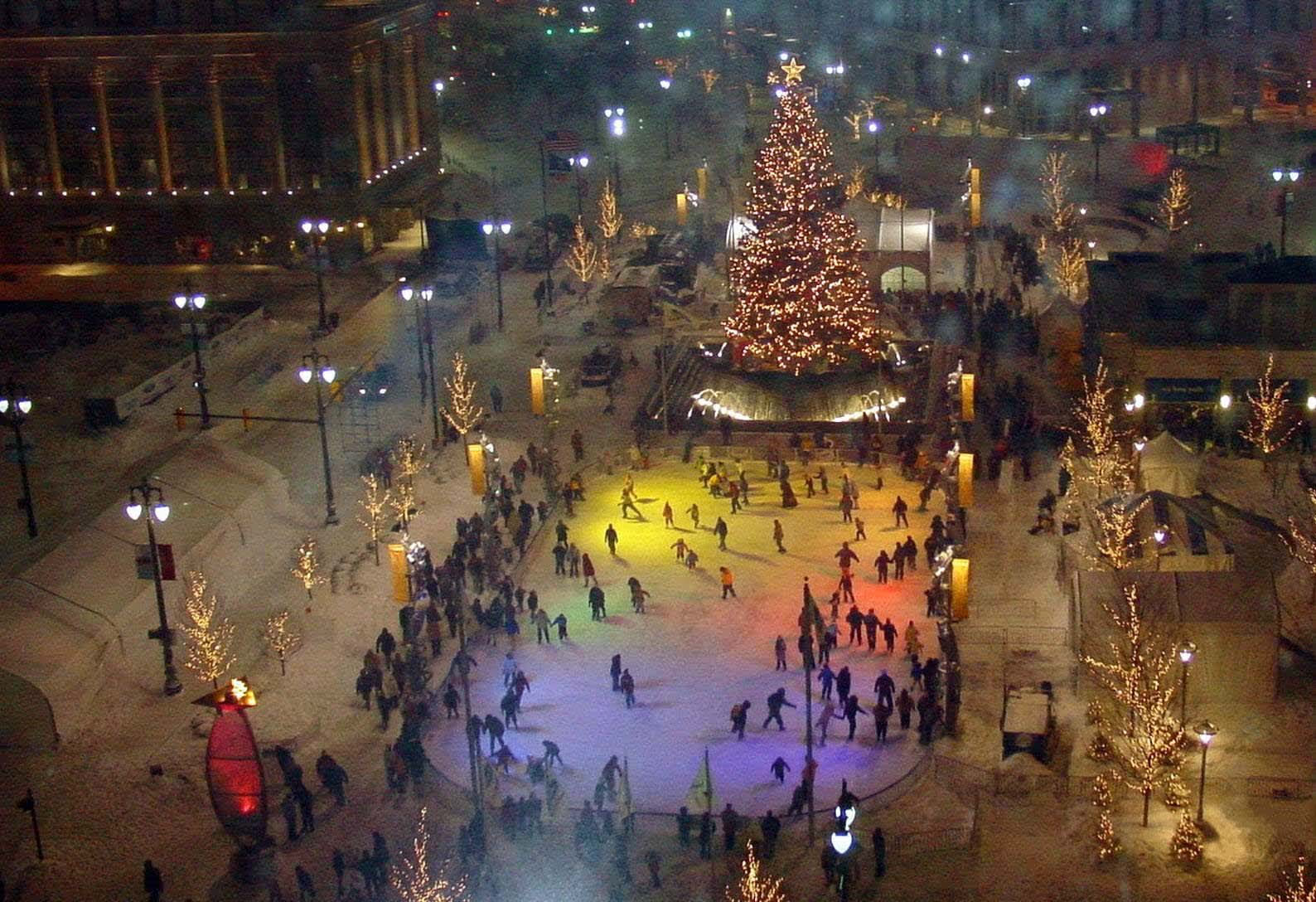
In 1980, Project for Public Spaces was asked to observe and propose recommendations for Bryant Park, which had gained a negative reputation among most New Yorkers, due to the dominance of drug dealing and use in the park. The opening of the park to the street and the addition of flexible seating, as well as outstanding ongoing management of the space, helped transform Bryant Park into one of the most influential models for public space in the United States. As a result, Project for Public Spaces also expanded its services from public space research to a robust technical assistance practice, working in hundreds of public spaces around North America, like Campus Martius, Discovery Green, and the Flint Farmers Market.
In 1987, Project for Public Spaces hosted the first of many International Public Markets Conferences, convening 400 market leaders from around the world at Pike Place Market in Seattle, WA, and launching our Public Markets program, which has since evolved into the Market Cities Program, to provide technical assistance, training, resources, and research to market operators and the people who support them.
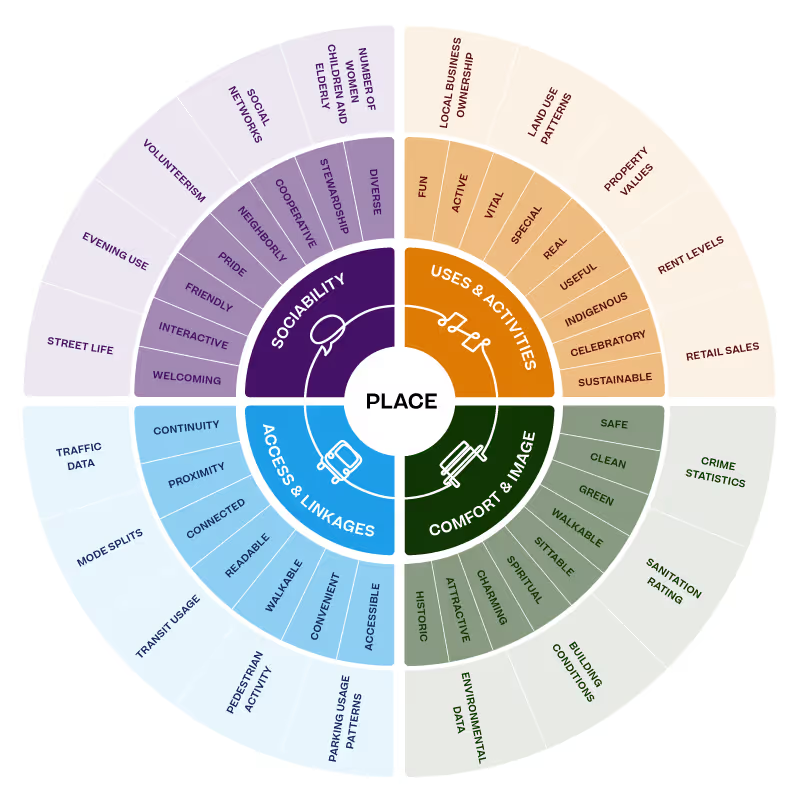
Reflecting on two decades of observing and advising on public spaces, the Project for Public Spaces team concluded that the users and potential users of a public space have the ability to understand and improve it themselves—often with more unique, meaningful, and lasting results than an external consultant acting alone. We decided to turn the planning process upside down to get it right side up. In 1995, using the term “placemaking” to describe a new process that started with identifying and engaging a community of stakeholders, and our staff adopted the role of facilitators, educators, and advisors in implementation.
In 1996, we launched the Urban Parks Institute with support from the Wallace Reader’s Digest Funds to develop a community of practice for people who develop and manage parks, particularly in neighborhoods with poor public space access and maintenance. The Institute offered regular conferences, research on best practices, and technical assistance.
The publication of How to Turn a Place Around in 2000 marked the beginning of Project for Public Spaces’ evolution into a resource center for all things placemaking and public space. Fueled by the rise of social media, our website and e-newsletter became a forum for discussing the issues of the day, from the securitization of public space after 9/11 to the turn to “lighter, quicker, cheaper” approaches to improving public space, like tactical urbanism, during the Great Recession. We also began offering our popular training series in placemaking, public markets, and streets as places, which continue to this day.
In 2005, Project for Public Spaces also began forming social impact partnerships with foundations, corporate social responsibility programs, and federal agencies to provide grants, technical assistance, and peer learning opportunities to a wider range of clients. Beginning with an initiative supported by the Ford Foundation and W.K. Kellogg Foundation to help public markets networks broaden their impact and improve their financial sustainability, we have since worked with partners like Southwest Airlines, the National Endowment for the Arts, and the William Davidson Foundation.

In the 2010s, the placemaking approach that Project for Public Spaces helped popularize in the 1990s blossomed into a truly international movement. Through the Future of Places conference series, we successfully advocated for integrating a community-powered approach to public space into the New Urban Agenda, UN-Habitat’s shared vision for a better and more sustainable future for cities endorsed by the United Nations in 2016.
In 2013, we also began convening placemaking practitioners through the Placemaking Leadership Council and Placemaking Week conferences, fostering regional networks on every continent. As these placemaking leaders started self-organizing globally, in 2019, Project for Public Spaces spun off PlacemakingX to continue connecting and supporting this movement.

Today, Project for Public Spaces is more dedicated than ever to ensuring more people have access to community-powered public spaces through partnerships with corporations and foundations that provide funding, technical assistance, and capacity building to local placemaking organizations across the United States. We also continue to support and convene public space designers, managers, and decision-makers worldwide through our conferences, training courses, and other events.
Project and Partner Inquiries
inquiries@pps.org
Events and Online Engagements
events@pps.org
Placemaking Week Questions
info@placemakingweek.org
International Public Markets Conference Questions
IPMC@pps.org
General
info@pps.org
+1 (212) 620-5660
Media
media@pps.org
Mailing Address
49 5th Ave #1025
Brooklyn, NY 11217
USA